
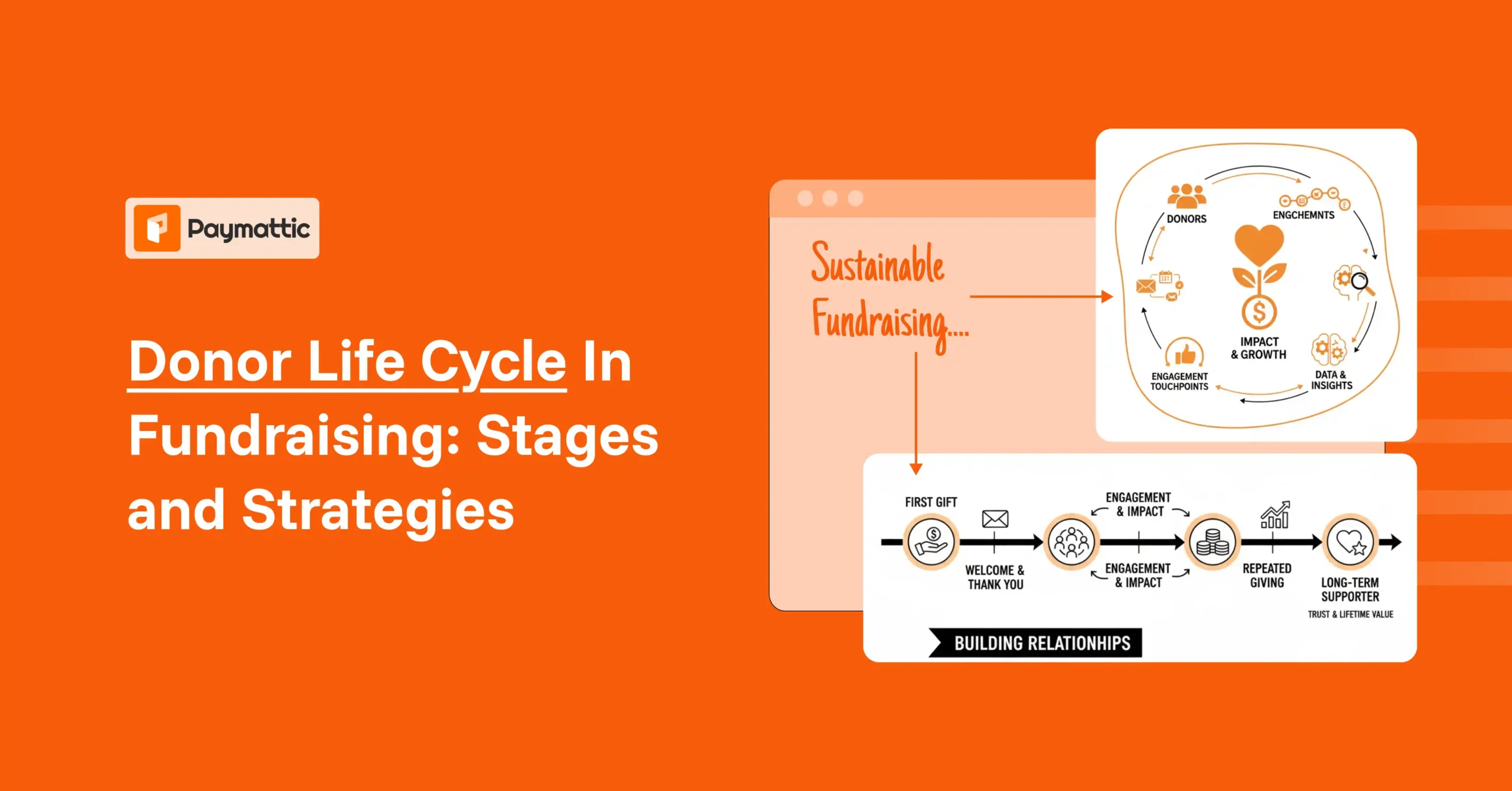
The Donor Life Cycle In Fundraising: Stages and Strategies for Sustainability


Table of Content
Download Paymattic – it’s Free!
Subscribe To Get
WordPress Guides, Tips, and Tutorials
We will never spam you. We will only send you product updates and tips.
Sustainable fundraising is a bit like gardening. You do not just throw seeds at the dirt and expect an orchard by next month. You have to prep the soil, water the plants, and keep the pests away.
In the nonprofit world, we call this the donor life cycle.
I have spent a lot of time looking at donor data, and I noticed something interesting. Most nonprofits treat fundraising as a series of one-off transactions.
They focus entirely on the ask and then wonder why 60% of their new donors never come back. If you want to build a sustainable nonprofit organization, you have to move from a transactional model to a relational one.
In this article, we are going to look at the technical phases of the donor life cycle, evaluate prospect identification, and explore how you can use strategies to scale these donor life cycle relationships.
Let’s get started.
What exactly is the Donor Life Cycle?
Think of the donor life cycle as the structural framework for every interaction your nonprofit has with a supporter. It is the journey someone takes from first hearing your name to leaving a gift in their will.
While people often talk about it as a circle, it is actually more of a dynamic ecosystem. Stages overlap. Sometimes people skip steps. But the core goal is always the same: maximize the lifetime value of every individual supporter.
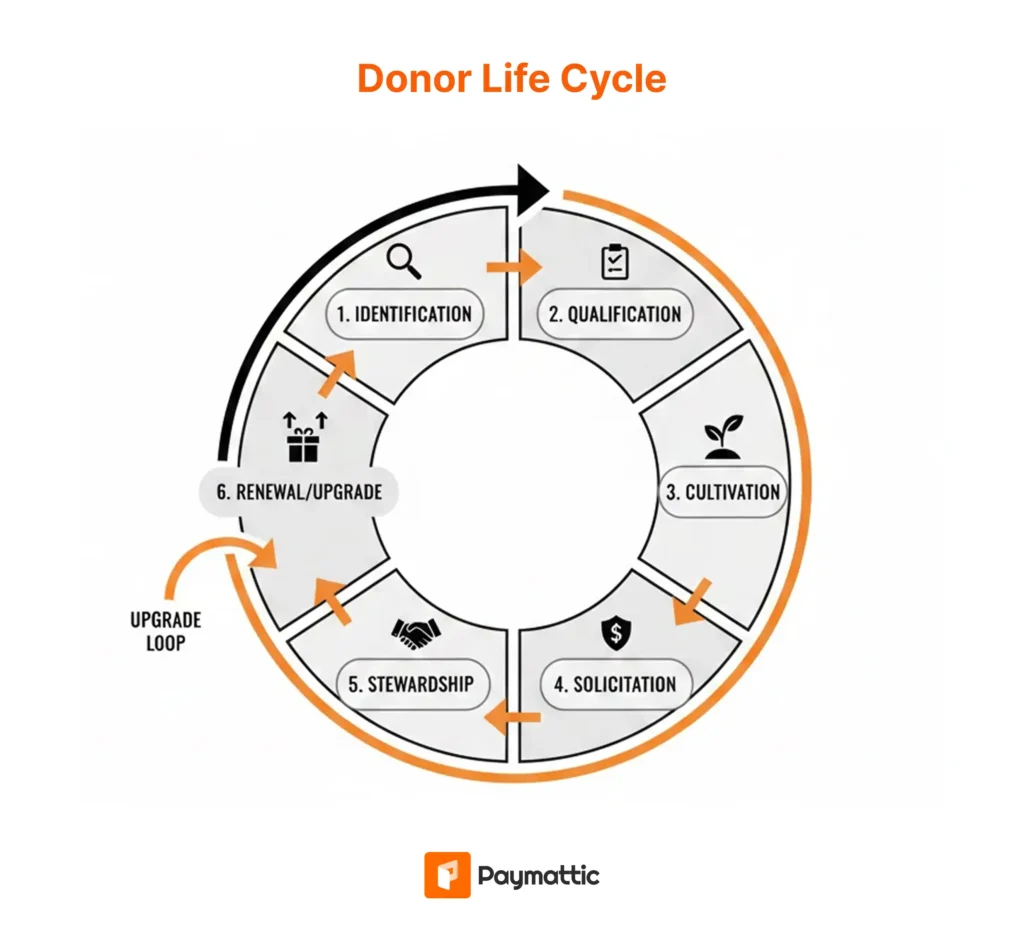
The cycle generally breaks down into three big phases: acquisition, retention, and upgrade. Within those phases, you have specific stages like identification, cultivation, and stewardship.
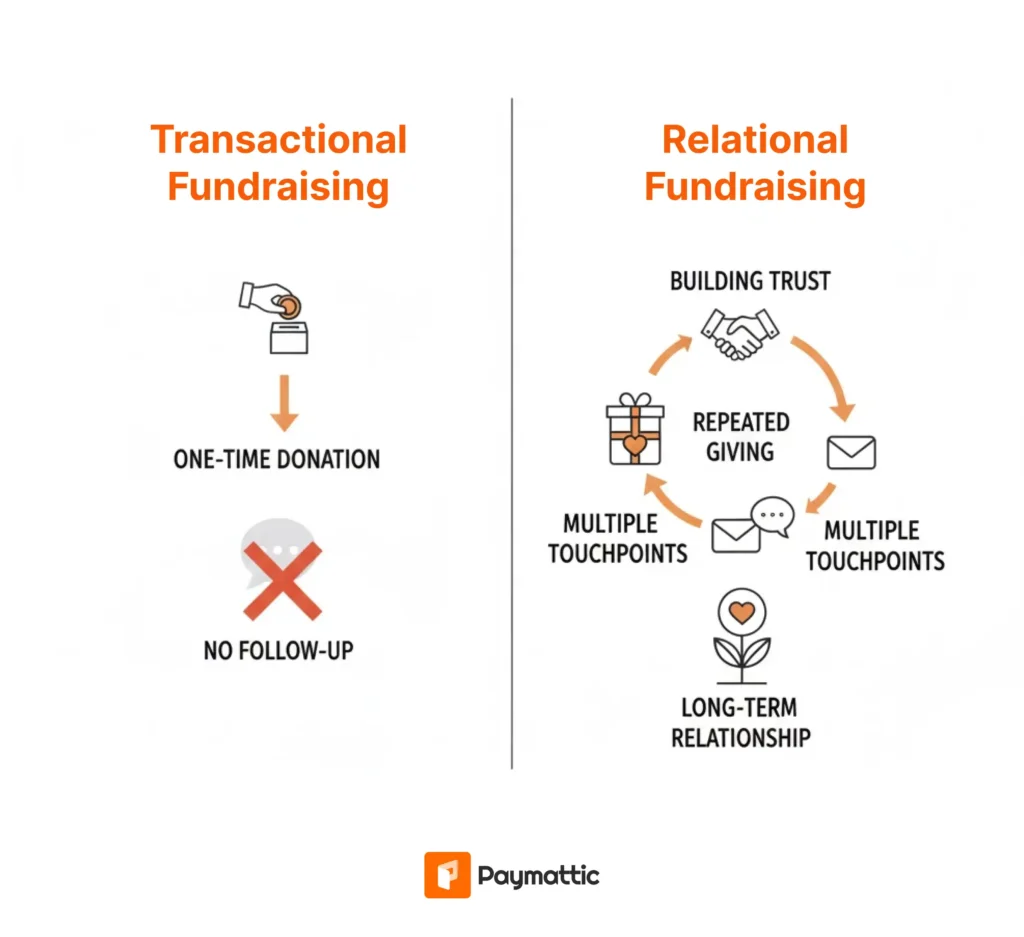
I noticed that organizations that master this framework can transition from a transactional fundraising model to a relational model. This is the difference between surviving and thriving.
Subscribe Newsletter
Subscribe to our newsletter for updates, exclusive offers, and news you won’t miss!

Stage 1: Identification (The hunt for alignment)
Everything starts here. Identification is the process of finding people who might care about your cause. I checked the numbers, and the most common mistake I see is spraying and praying. Nonprofits try to talk to everyone and end up reaching no one.
Effective identification is about finding a broad pool of prospective donors who actually fit your mission. You are looking for two specific markers: capacity and affinity.
Capacity vs. affinity
Capacity refers to whether they can afford to give. Affinity refers to whether they actually care about what you do. I have noticed that affinity is usually the better indicator of long-term loyalty. A wealthy person who does not care about your cause is just a waste of your marketing budget.
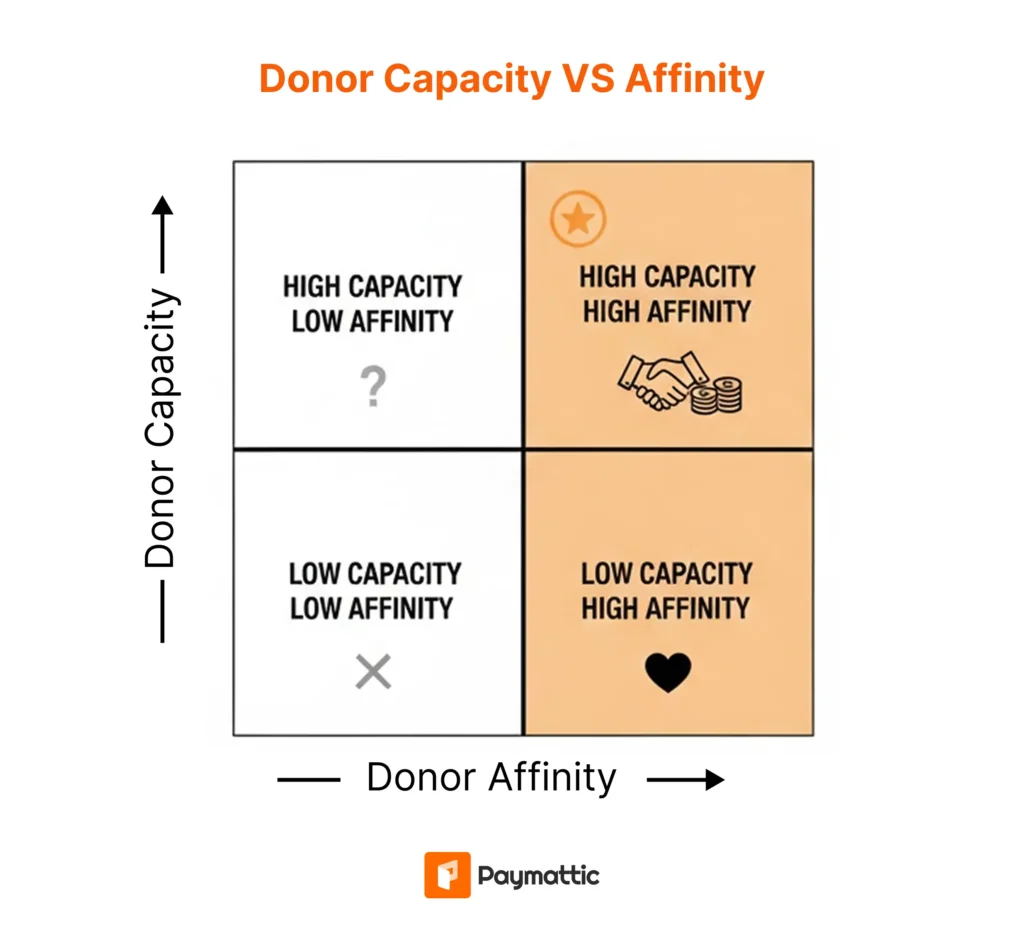
I noticed that when you focus on affinity first, your conversion rates jump. You can find these prospects through:
- Your current volunteer list
- Lapsed donors who might want to return
- Social media followers who engage with your content
- Friends of your board members
Stage 2: Qualification (filtering the noise)
Once you have a list of prospects, you have to qualify them. I did a deep dive into qualification strategies, and it turns out this is the most skipped step in fundraising. Qualification is the pivotal step where you decide if a prospect is actually worth a major gift officer’s time.
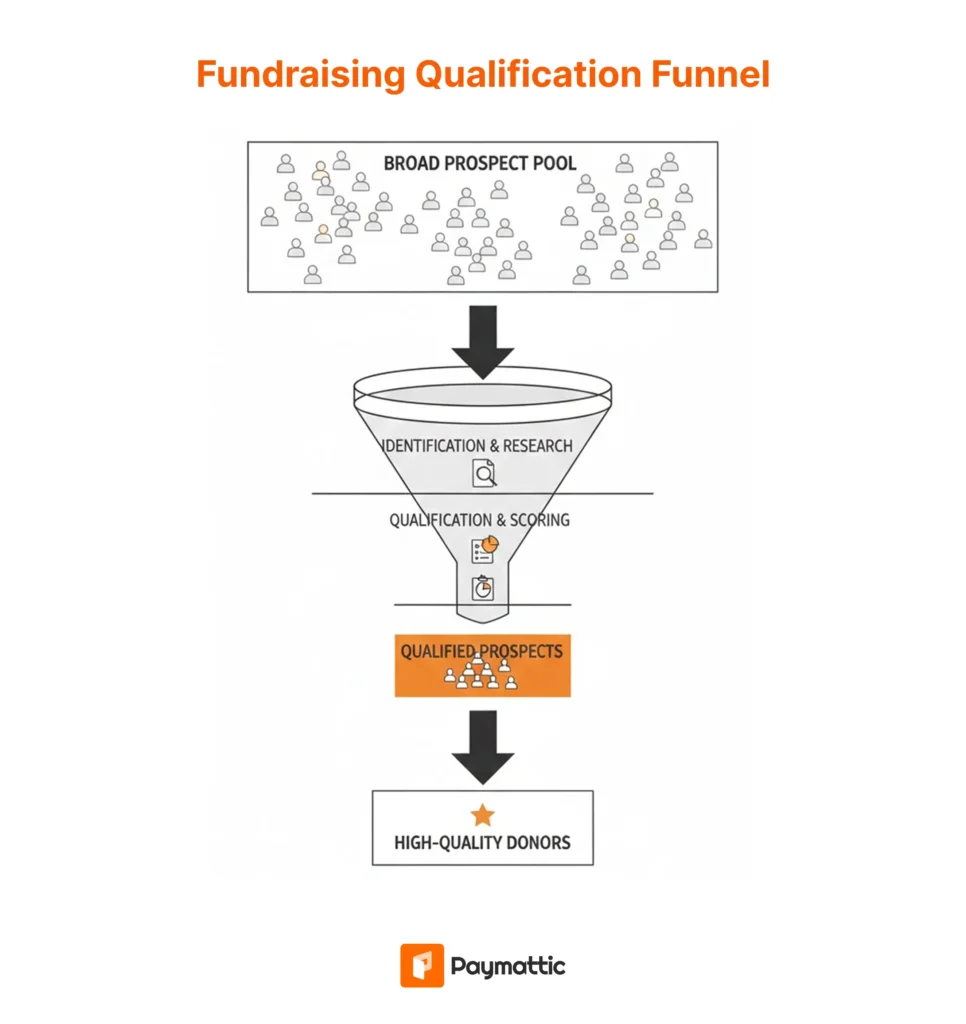
I have seen reports suggesting that up to 75% of gift officer caseloads are filled with non-responsive people. That is a massive drain on resources. If you are a small team, you cannot afford to waste hours on someone who has no intention of ever making a significant gift.
How to qualify correctly
You should look for specific indicators during this phase:
- Philanthropic history: Do they give to similar causes? If they support five other animal shelters, they are a great prospect for your animal sanctuary.
- Wealth markers: Do they have the assets to make a significant impact?
- Engagement: Are they opening your emails? Are they attending your events?
I checked, and the most successful fundraisers use “prospect research” to automate a lot of this. Instead of guessing, they use data to evaluate capacity and desire.
Stage 3: Cultivation (The art of relationship building)
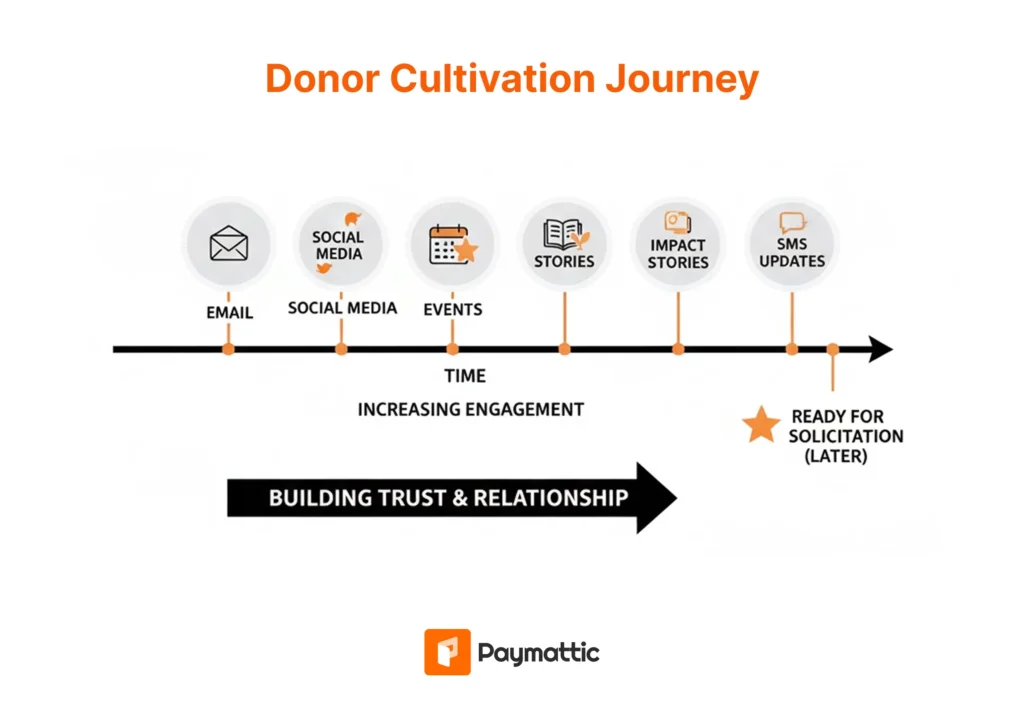
Cultivation is where the “transactional” vs “relational” battle is won or lost. This is the process of building a relationship before you ever ask for money. I noticed that the best fundraisers treat cultivation like a conversation, not like a pitch. You are moving a prospect from “I know who you are” to “I trust what you do.”
Strategies that build trust
I have seen a few strategies work exceptionally well during cultivation:
- Hyper-personalization: Use AI and CRM data to send content that matches their specific interests. If a donor cares about your education programs, do not send them a 10-page report on your building project.
- Multi-channel outreach: Do not just stick to email. Use SMS, social media, and even old-school direct mail. Variety keeps you top of mind without being annoying.
- Small events: Get them in the room. Whether it is a virtual webinar or a small coffee meetup, seeing the impact firsthand is a powerful motivator.
I noticed that cultivation should feel like a friendship. You are asking questions and learning about them, just like they are learning about you.
Stage 4: Solicitation (making the ask)
Eventually, you have to ask. Solicitation is the multi-channel orchestration of requesting a gift. I checked some case studies, and the most successful asks are the ones that feel like the natural next step in the relationship. If you have done your cultivation right, the donor should almost be expecting the ask.
The science of the ask
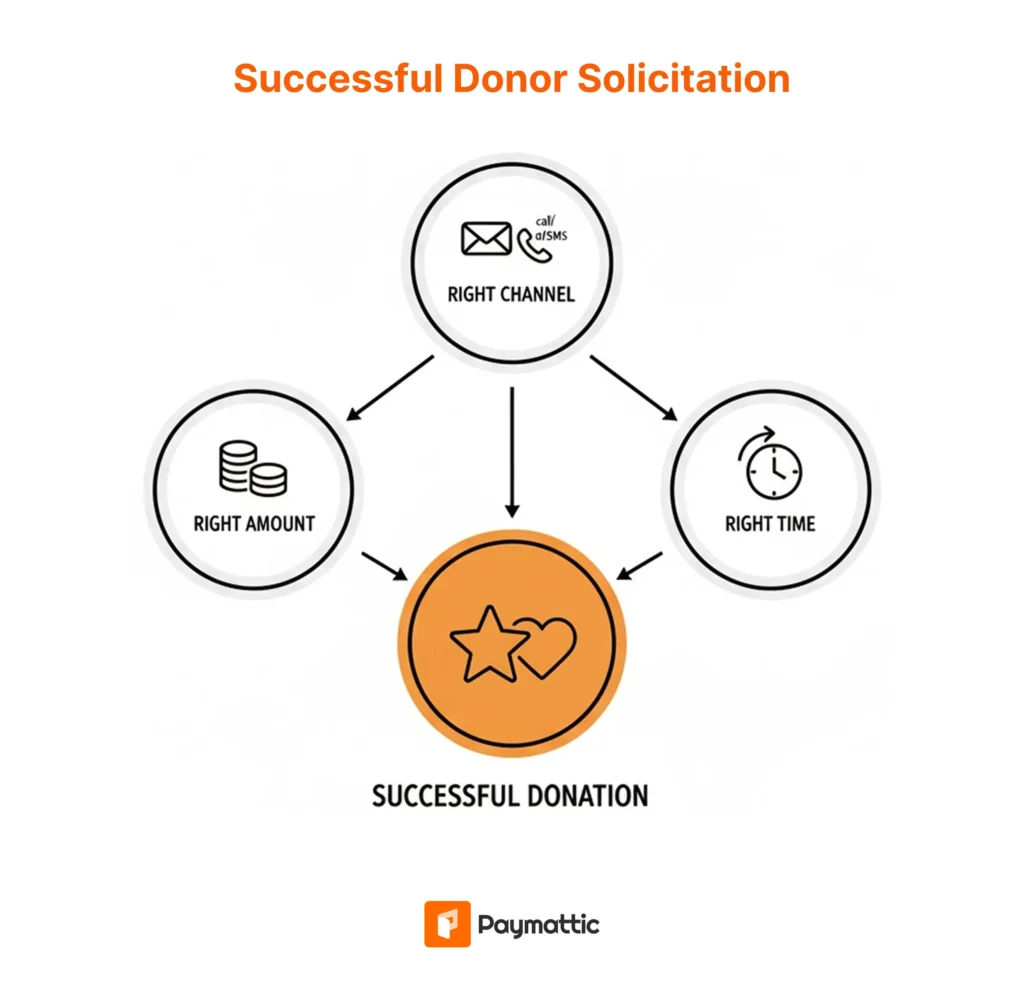
To get this right, you need to use the data you have gathered:
- The right amount: Use AI-driven suggested ask amounts based on their wealth markers. If you ask for too little, you leave money on the table. If you ask for too much, you might scare them off.
- The right channel: Some people want a face-to-face meeting for a $5,000 gift. Others prefer a simple “Donate” button on a mobile-friendly donation form for a $50 gift.
- The right time: Look at their giving history. Do they always give in December? Do not try to rush them in June.
I did a review of solicitation methods, and responsive fundraising is the way to go here. This means your ask is based on their behavior, not just your calendar.
Stage 5: Stewardship (The secret to retention)
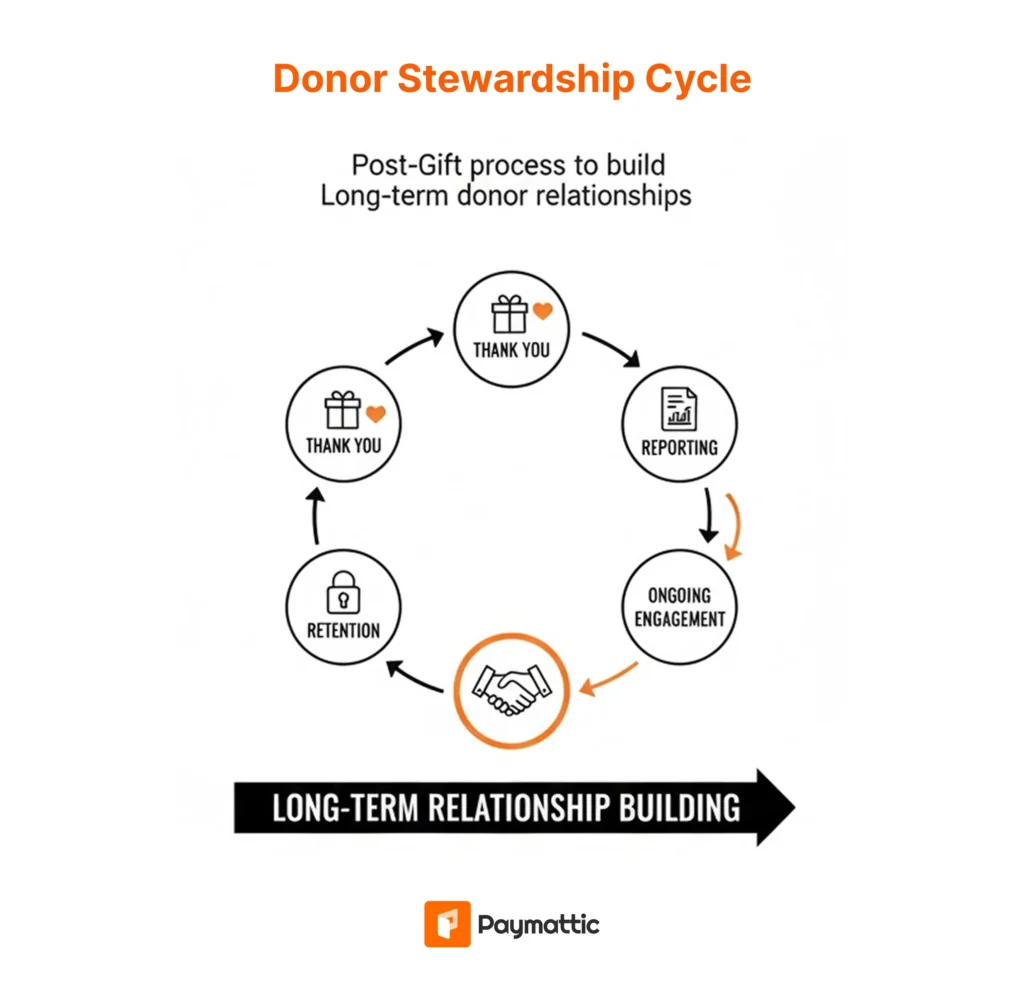
Stewardship is what happens after the gift. This is where you thank the donor and show them their impact. I have said it before: a thank you is not stewardship; it is just the first step. True stewardship is about making the donor feel like a partner in your mission.
Three pillars of stewardship
If you want to keep your donors, you need to do these three things:
- Acknowledge immediately: Send a personalized thank you within 48 hours. I noticed that donors who are thanked quickly are 4x more likely to give again.
- Report impact: Tell them exactly where their money went. Use impact reports and stories. Show them the “before and after.”
- Ongoing engagement: Keep them involved without asking for more money immediately. Invite them to volunteer or send them a behind-the-scenes video.
I’ve seen that stewardship goals should revolve around forming a mutually beneficial relationship. The nonprofit receives support, and the donor feels the glow of making a difference.
Read: Donor Psychology 101: The Science Behind Why People Donate
Donor acquisition strategies
If the donor life cycle is a cathedral, acquisition is the process of inviting people onto the grounds. I noticed that many organizations struggle here because they treat acquisition as a broad shout into the void rather than a precise strategic operation.
In 2026, the cost of acquiring a new donor is rising, which means your strategies must be more sophisticated than just buying a mailing list.
Here are the high-impact donor acquisition strategies that successful nonprofits are using to build a robust top of the funnel:
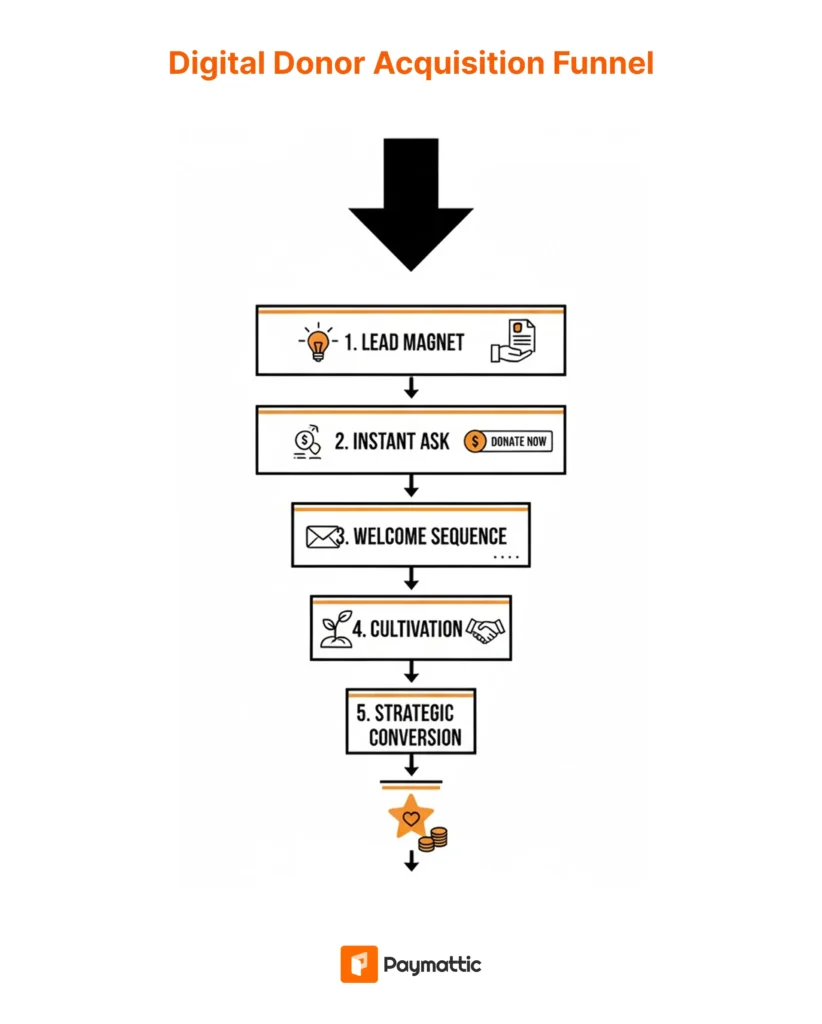
1. The 5-step digital acquisition funnel
According to research from NextAfter, digital acquisition is no longer about the “Donate Now” button. It is about a value exchange.
- The lead magnet: Offer an ebook, a guide, or exclusive research in exchange for an email.
- The instant ask: Present a small gift opportunity on the “Thank You” page of your lead magnet.
- The welcome sequence: Use automated emails to share your “why” before asking for more.
- Cultivation: Provide value through impact stories and educational content.
- The strategic conversion: Make a targeted ask based on the specific interests the prospect has shown.
2. Algorithmic lookalike modeling
I noticed that the most efficient way to find new donors is to look at who you already have. By using your CRM data to create lookalike audiences on social platforms, you can target people with similar interests, behaviors, and giving capacities as your top 10% of supporters. This reduces wasted ad spend and increases the quality of the leads coming into your cycle.
3. Community-led growth (peer to peer)
People trust people more than they trust brands. I have seen that peer-to-peer fundraising is one of the most effective acquisition tools because it bypasses the trust gap. When a current supporter asks their network to give, they are providing a built-in endorsement. This effectively turns your retention phase into an acquisition engine.
Donor retention strategies
Acquisition gets someone in the door, but retention keeps the lights on. I checked the math, and it is startling: a mere 10% increase in donor retention can double the lifetime value of your donor database.
Yet, the industry average for donor retention hovers around 40% to 45%. This means most nonprofits are losing more than half of their supporters every single year.
If you want to stop the leaky bucket syndrome, you need a retention strategy that focuses on three core areas: speed, transparency, and predictive engagement. Here are some strategies:
1. The 48-hour rule for acknowledgments
I did a review of stewardship data, and the speed of your first thank you is the single biggest predictor of a second gift. Donors who receive a personalized acknowledgment within 48 hours are 4x more likely to give again.
In 2026, this should be automated. Your CRM should trigger a personalized email immediately, followed by a handwritten note or a phone call for gifts above a certain threshold.
2. Hyper Personalized Impact Reporting
I’ve seen that donors stop giving because they no longer feel their gift matters. General newsletters do not work anymore. You need to provide “restricted” or “segment-based” impact reporting.
If a donor gave to your clean water initiative, their retention path should only include stories about wells and filtration. Use digital “impact dashboards” where donors can log in and see exactly how their specific dollars were spent.
3. The monthly giving “Lock In”
According to 4aGoodCause, the average monthly donor gives $648 per year. But the real secret is their retention rate. Monthly donors typically have retention rates of 80% to 90%, compared to 20% for first-time one-time donors.
Your primary retention strategy should be to move as many one-time givers into a monthly “Sustainer Circle” as possible.
Donor upgrade strategies
If retention is about keeping donors from leaving, the upgrade phase is about maximizing their potential. This is where you move a supporter from a $50 occasional giver to a $5,000 major investor.
I checked the data, and the Pareto Principle is alive and well in fundraising: over 80% of your funds will likely come from less than 20% of your donors.
To move people up the ladder in 2026, you need to use a mix of behavioral psychology and data intelligence.
1. Mid-level giving tiers
I noticed that many nonprofits have a missing middle. They have thousands of small donors and a handful of major donors, but nothing in between.
Successful upgrade strategies involve creating a specific “Mid Level” program (often $1,000 to $5,000 annually). By giving this group a name, like the “Founders Circle,” and offering slightly more exclusive access, you give small donors a clear target to aim for.
2. The recurring gift upsell
Monthly giving is a goldmine for upgrades. I noticed that donors who give monthly are more likely to accept a small annual increase than one-time donors are to double their gift.
In 2026, you should be using “automated nudge” campaigns. If a donor has given $25 a month for a year, ask them to move to $30. The friction is low, but the cumulative impact is massive.
3. AI-powered wealth and affinity screening
Don’t guess who can give more. I checked the latest prospect research tools, and almost all of them can now cross-reference your CRM data with public wealth markers in real time.
This allows you to flag “hidden gems” – people who give $20 a month but have the capacity to give $20,000. These people should be immediately moved into a personalized cultivation track for a major gift upgrade.
Create your own Donor Life Cycle plan
You should not leave this to chance. I recommend creating a formal plan for each stage of the cycle.
- Phase 1 (Acquisition): How will we find new people this month?
- Phase 2 (Cultivation): What non-ask touchpoints do we have planned?
- Phase 3 (Solicitation): Who are we asking, and for how much?
- Phase 4 (Stewardship): How will we prove the impact of their gift?
I noticed that an organized approach plays a huge role in your ultimate success. It is always worthwhile to revisit your current protocols and check for gaps or communication silos.
I’ve created a 30-day donor engagement plan. You can use the plan to power charge your donor life cycle.
Measuring success: KPIs you actually need
You cannot manage what you do not measure. I noticed that many nonprofits track the wrong things. They focus on total dollars raised but ignore the health of their donor base.
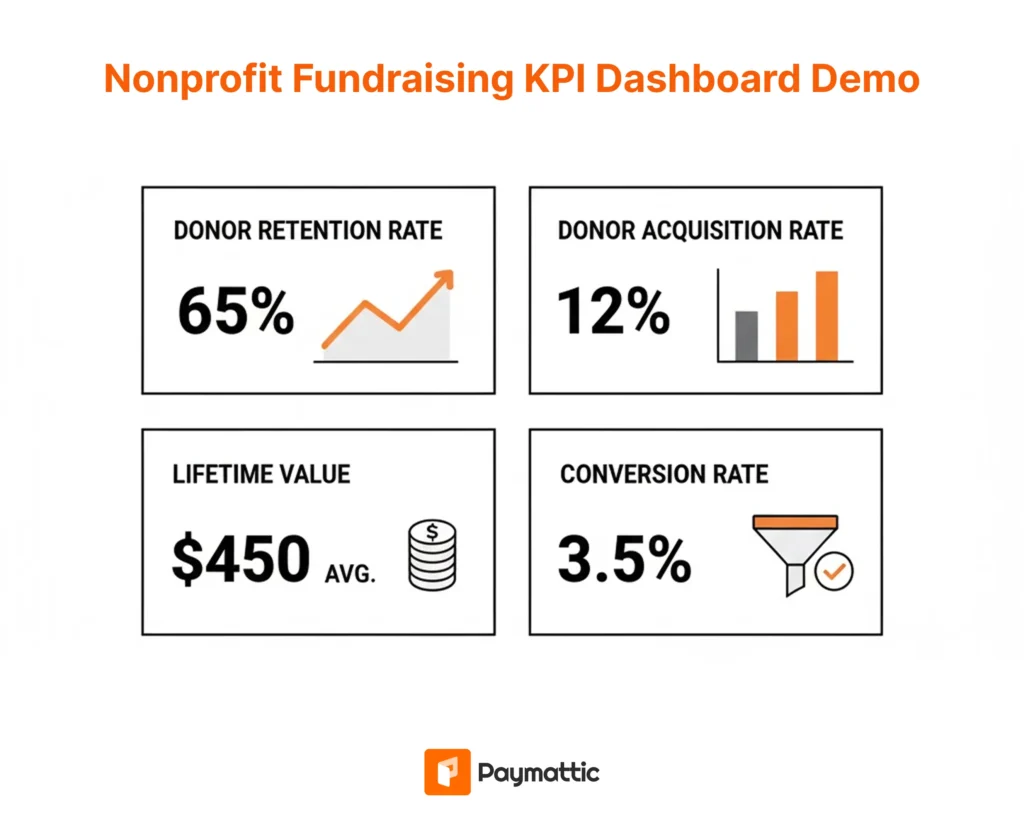
If you want to master the life cycle, you need to track donor engagement KPIs:
- Donor Retention Rate: What percentage of last year’s donors gave again this year?
- Donor Acquisition Rate: How fast is your “broad pool” growing?
- Lifetime Value (LTV): How much is the average donor worth over the entire span of their relationship with you?
- Conversion Rate: How many prospects move from “Identified” to “Solicited”?
Conclusion
The donor life cycle is not just a fundraising tactic; it is an organizational philosophy. It is about realizing that every donor is a person, not a transaction. I checked, and the organizations that win are the ones that stop looking for “donations” and start looking for “connection.”
If you focus on the stages (identification, qualification, cultivation, solicitation, and stewardship), the money will follow. But more importantly, you will build a community of advocates who will sustain your mission for years to come.
So, take a look at your current process. Where is the leak? Is it in acquisition, or are you failing to steward the people you already have? Fix the cycle, and you will fix your fundraising.
Have a great day.
Read: How To Keep Your Donors For Life Using The Donor Engagement Cycle?
Ready to get started?
Experience WordPress payment and donation like never before. Try Paymattic now!
Frequently asked questions about the donor life cycle
Here are some frequently asked questions and their answers about the donor life cycle:
1: What is the donor life cycle in fundraising?
The donor life cycle is the structured path a supporter takes from first discovering your nonprofit to becoming a long-term, higher-value donor. It aligns five stages: identification, qualification, cultivation, solicitation, and stewardship into three phases (acquisition, retention, upgrade) to maximize each donor’s lifetime value.
2: What are the main stages of the nonprofit donor lifecycle?
The main stages are identification (finding aligned prospects), qualification (filtering for capacity and interest), cultivation (building trust before any ask), solicitation (making a timely, well-targeted ask), and stewardship (thanking, reporting impact, and engaging). Together, they form a predictable pipeline from first gift to major or planned giving.
3: Why is the donor life cycle so important for nonprofits?
The donor life cycle turns random one-off gifts into a predictable revenue engine. By managing every stage, you reduce wasted acquisition spend, improve retention, and unlock upgrades. Good stewardship boosts repeat giving, while monthly donors retain at very high rates, lifting average gift and total lifetime value.
4: How does the donor life cycle improve donor acquisition and retention?
For acquisition, the donor life cycle prioritizes aligned prospects and targeted tactics like digital funnels, lookalikes, and peer-to-peer campaigns. For retention, it builds in fast, personalized thank-yous and segment-specific impact reporting, plus monthly giving offers; together reducing churn and significantly increasing the long-term value of each donor.
5: How can I apply donor lifecycle stages to my own fundraising strategy?
Turn each stage into a simple playbook. Define signals for moving prospects forward, map non-ask cultivation touchpoints, standardize ask amounts and channels, and lock in a 48-hour thank-you plus segmented impact updates. Layer in monthly and mid-level programs so your donor life cycle runs as a repeatable system.
Join the thousands already enjoying Paymattic Pro!

Mahfuzur Rahman Nafi
Mahfuzur Rahman Nafi is a Marketing Strategist at WPManageNinja. With 4 years of experience in Product Marketing, he has developed marketing strategies, launched products, written content, and published websites for WordPress products. In his free time, he loves to read geeky stuffs.
Leave a Reply