
Best eCommerce Payment Solutions For Your Business


Table of Content
Download Paymattic – it’s Free!

Subscribe To Get
WordPress Guides, Tips, and Tutorials
We will never spam you. We will only send you product updates and tips.
TL;DR:
eCommerce payment solutions are systems that allow online businesses to accept, process, and manage customer payments securely through methods like cards, digital wallets, and bank transfers. The right setup reduces checkout friction, builds trust, and helps you convert more customers.
Popular payment gateways to consider:
– Stripe – Best for flexibility, subscriptions, and global payments
– PayPal – Strong trust factor with a massive user base
– Square – Great for businesses selling both online and offline
– Razorpay – Ideal for businesses targeting India
– Authorize.Net – Reliable option for established businesses
– Mollie – Best suited for European markets
To simplify managing multiple gateways, you can use Paymattic, which lets you integrate and control different payment solutions from one place without juggling multiple plugins.
Every year, businesses leave billions of dollars on the table. Not because they had bad products, but because customers couldn’t pay the way they wanted to.
Maybe the checkout only accepted cards, but the customer preferred PayPal. Maybe the page looked untrustworthy. Maybe the process had one too many steps, and they gave up.
Whatever the reason, the sale was gone.
Payment friction is one of the quietest killers of eCommerce revenue. And yet, most business owners spend months perfecting their product, their branding, their ads, then spend hours picking a payment solution.
If that sounds familiar, this guide is for you.
We’re going to walk through everything you need to know about eCommerce payment solutions: what they actually are, which ones are worth your time, and how to integrate a payment gateway on your WordPress website.
Let’s get into it.
What are eCommerce payment solutions?
An e-commerce payment solution is a tool or service that allows your online store to accept payments. It sits between the moment a customer decides to buy and the moment the money reaches your account, taking care of everything in between.
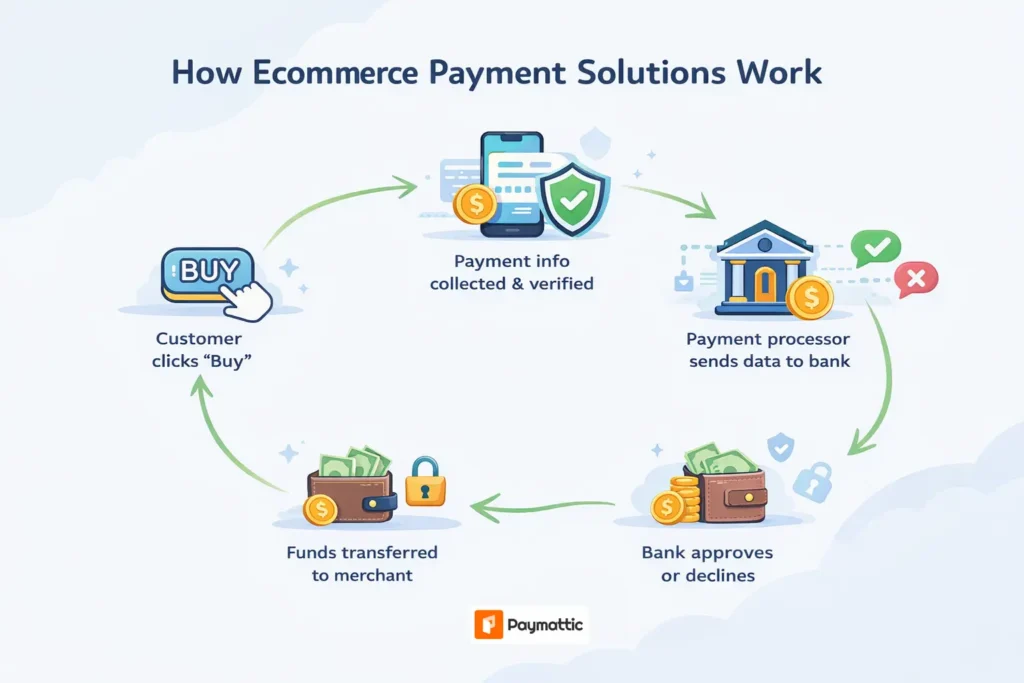
Think about the last time you bought something online. You picked your item, headed to checkout, entered your card details or clicked “Pay with PayPal,” and within seconds, your purchase was done.
The whole experience felt quick and effortless.
But behind that simplicity, a lot is happening in the background. Your payment details are securely collected, encrypted, and sent for verification. The system checks if the funds are available, confirms the transaction with the bank, and then processes the payment, all within a few seconds. At the same time, it ensures that sensitive information stays protected and the transaction is completed without risk.
eCommerce payment solutions are the systems that make all of this possible.
They handle the entire process of moving money from your customer to your business in a way that’s fast, secure, and reliable, without the customer ever having to think about it.
For anyone running or planning to run an online business, choosing the right payment solution isn’t just a technical decision. It directly affects how trustworthy your checkout feels, how smoothly transactions go through, how quickly you receive your money, and ultimately how many sales you’re able to close.
Types of payment methods your customers expect
Before you choose a payment gateway, it’s worth stepping back to think about your customers. What payment methods do they actually want to use?
The more payment options you offer, the fewer customers you’ll lose at checkout. Here’s what most online shoppers expect today:
Credit and debit cards
Still the most widely used payment method globally. Visa, Mastercard, and American Express dominate here. If you only offer one payment method, it should be card payments; nearly every major gateway supports them.
Digital wallets
Apple Pay, Google Pay, and similar services are growing fast. Many customers prefer these because they don’t have to enter card details manually. If you’re targeting mobile shoppers especially, digital wallet support is a must.
Bank transfers
Common in Europe and many parts of Asia. Direct bank-to-bank transfers are trusted, low-cost, and preferred by customers who are cautious about sharing card details. Solutions like SEPA Direct Debit or ACH transfers are widely used for this.
Buy Now, Pay Later (BNPL)
Services like Klarna, Afterpay, and Affirm are gaining serious traction, especially for higher-ticket items. Offering BNPL can increase average order value by making purchases feel more affordable to customers.
The key takeaway here: the more payment options you provide, the higher your conversion rate will be. Customers abandon carts when their preferred payment method isn’t available.
Local and regional payment methods
If you sell internationally, this one matters a lot. Customers are far more likely to complete a purchase when they see a payment method they already know and trust.
Customers in Brazil might prefer Boleto Bancário. Shoppers in the Netherlands often use iDEAL. In parts of Southeast Asia, local wallets dominate over credit cards. Research your target market, and offering a familiar local payment option can significantly boost conversions.
This kind of flexibility means you can adapt your checkout experience based on where your customers are coming from, without rebuilding your payment system from scratch.
Subscribe Newsletter
Subscribe to our newsletter for updates, exclusive offers, and news you won’t miss!

Factors to consider before choosing an eCommerce payment solution
Picking a payment solution isn’t just about finding one that works; it’s about finding one that works for your business. The wrong choice can quietly cost you revenue through hidden fees, failed transactions, or a checkout experience that pushes customers away at the last moment.
Before you commit, it’s worth looking a little deeper.
Security and compliance
Any payment solution you consider should be PCI DSS compliant; that’s the baseline standard for safely handling cardholder data. But security doesn’t stop there. Look for features such as SSL encryption, tokenization (which replaces sensitive data with secure tokens), two-factor authentication, and built-in fraud-detection tools. Some gateways also support 3D Secure authentication, adding an extra verification step for online payments.
At the end of the day, customers are trusting you with their financial information. A secure system doesn’t just protect them, it protects your business from disputes, chargebacks, and potential legal issues.
Transaction fees
Every payment provider takes a cut, but how they structure those fees can vary quite a bit. Some use flat-rate pricing (a fixed percentage per transaction), while others use interchange-plus (the base card network fee plus a markup).
What many businesses overlook are the additional costs:
- Cross-border transaction fees
- Currency conversion charges
- Refund and chargeback fees
These can add up quickly, especially if you sell internationally. The key here is transparency. A slightly higher upfront fee is often better than a complicated structure filled with hidden costs.
Supported payment methods
Customers expect to pay in a way that feels familiar to them. That might be credit cards, digital wallets, bank transfers, or even Buy Now, Pay Later options.
But more options don’t automatically mean better results. What matters is offering the right payment methods for your audience. If your customers prefer PayPal or local wallets and don’t see them at checkout, there’s a good chance they’ll leave before completing the purchase.
A well-matched payment setup reduces friction, and friction is what kills conversions.
Platform Integration
Not every payment solution integrates smoothly with every platform. Before making a decision, make sure it works well with your existing setup, whether that’s WordPress, WooCommerce, Shopify, or something custom.
Native integrations or official plugins are always the safer choice. They’re easier to set up, more stable, and less likely to break when updates roll out. Trying to force a workaround might seem manageable at first, but it often leads to ongoing maintenance issues.
Global reach and currency support
If you have customers from different countries or plan to, this becomes a key factor. A good payment solution should support multiple currencies so customers can see prices in their local currency instead of doing conversions in their head.
It’s also important to check whether the provider supports your target regions at all. Some gateways are not available in certain countries, or they offer limited functionality depending on location.
On top of that, supporting local payment methods can make a big difference. What feels standard in the US or UK may not be familiar to someone in Europe, Asia, or South America.
Payout speed
Getting paid is the whole point, so don’t overlook how quickly funds actually reach your account. Some providers offer daily payouts, others take a few business days, and some operate on weekly schedules.
Also, keep in mind that newer accounts or higher-risk businesses may face temporary holds or rolling reserves, where a portion of funds is held back for a period of time.
If your business relies on steady cash flow, payout timing isn’t just a detail; it’s a critical factor.
Customer support
Payment issues rarely happen at convenient times. A failed transaction, a stuck payout, or a dispute can happen at any hour, and when it does, you need answers quickly.
Look for a provider that offers reliable support, whether that’s live chat, email, or phone. Even strong documentation can make a big difference when you’re trying to troubleshoot something on your own.
When something goes wrong (and eventually, something will), good support can save you hours of frustration and potentially lost revenue.
6 best eCommerce payment solutions
You already get clear idea of how eCommerce payment solutions work, it’s time to look at some of the most widely used options. Each one comes with its own strengths, and the right choice for you will depend on your business model, where your customers are located, and how they prefer to pay.
Stripe
Best for: Businesses that need flexibility, subscriptions, or global reach.
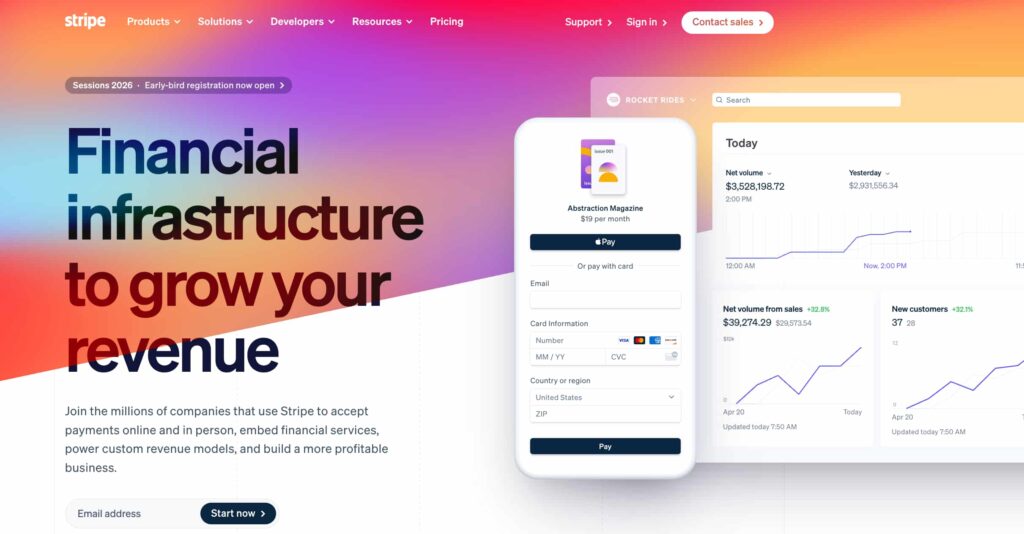
Stripe is one of the most developer-friendly and feature-rich payment gateways available. It supports an enormous range of payment methods, currencies, and business models, from one-time purchases to subscriptions and marketplaces.
One of the reasons for Stripe’s popularity is its flexibility; you can customize pretty much everything in your checkout experience. Additionally, it integrates smoothly with WordPress through payment plugins. That’s why most businesses choose Stripe for collecting online payments.
Key strengths:
- Supports 135+ currencies and localized payment methods
- Excellent for subscriptions and recurring billing
- Powerful APIs for custom checkout experiences
- Built-in fraud detection (Stripe Radar)
- Stripe Tax for automated tax compliance
- Available in 46+ countries
Limitations:
- Standard fees are 2.9% + $0.30 per transaction (can add up at scale)
- Requires some technical setup for advanced features
- Account holds and fund freezes have been reported (more common with high-risk categories)
Stripe is a strong default choice for most online businesses, especially those that want flexibility and room to grow.
Want to set up Stripe on your WordPress site? Here’s a simple step-by-step guide.
PayPal
Best for: Businesses, freelancers, and international sellers who want trusted and widely recognized way to accept online payments.
PayPal is the most recognized name in online payments globally. With over 400 million active users, offering PayPal at checkout instantly builds trust, as many customers specifically look for the PayPal logo before buying.
The best part of PayPal is that you can literally set it up in about five minutes and start accepting payments. PayPal also gives you options. Customers can pay with their PayPal balance (if they’ve got money sitting there), link a bank account, use a credit card, or even tap into financing options like Pay Later. It’s flexible in a way that meets people where they are.
Key strengths:
- Massive user base of over 400+ million active accounts globally
- Strong buyer and seller protection policies
- Supports 100+ currencies
- No monthly fees on the standard plan
- PayPal Express Checkout reduces cart abandonment
Limitations:
- Fees can be higher than competitors’, especially for international transactions
- Account holds and disputes are a known pain point for sellers
- Checkout experience can redirect users away from your site (though newer integrations reduce this)
PayPal works best as a complementary option alongside a primary gateway like Stripe, rather than your only solution. Many customers specifically look for the PayPal button at checkout; having it available captures those buyers.
Square
Best for: Small businesses, retail stores, or anyone selling both online and in-person.
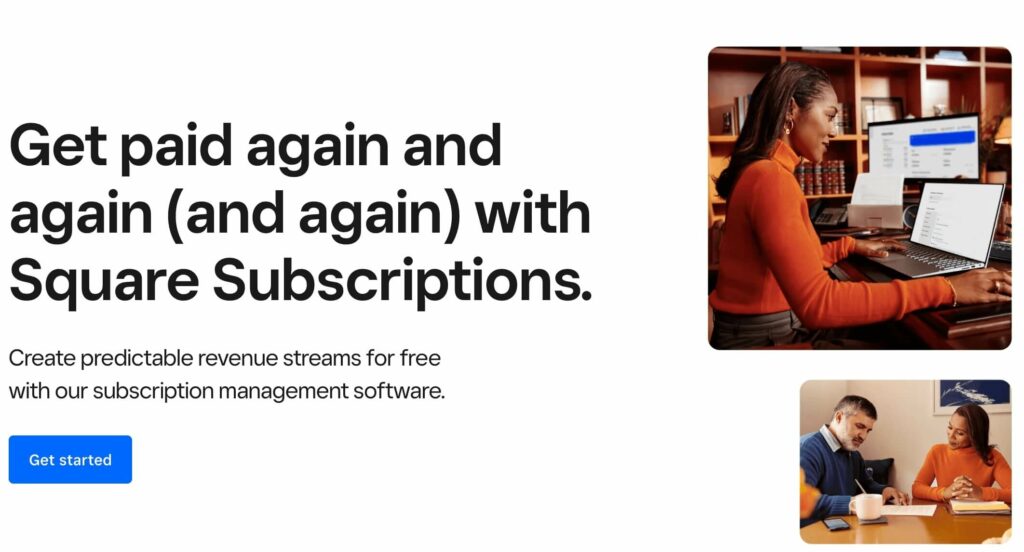
Square is a well-known and trusted payment processing platform because it started as an in-person payment solution, but has grown into a strong eCommerce option too. It’s particularly popular among small businesses and those who sell both online and in a physical location.
Square supports various payment methods such as credit/debit cards, mobile wallets like Apple Pay and Google Pay. The best part of using Square is that it has no monthly fees for its basic services, but you pay a transaction fee per payment processed.
Key strengths:
- Smoothly sync between online and offline sales
- Free POS hardware to get started
- Built-in inventory management
- No monthly fees on the basic plan
- Fast setup, you can be selling the same day
Limitations:
- Limited international availability (mainly US, Canada, UK, Australia, Japan, Ireland)
- Less flexible for complex subscription or digital product setups
- Transaction fees similar to Stripe (2.9% + $0.30 online)
Square is a cost-effective payment solution for retail businesses that have moved online or local service businesses that want a simple, all-in-one solution.
Authorize.net
Best for: Established US businesses, B2B, and businesses with high transaction volumes.
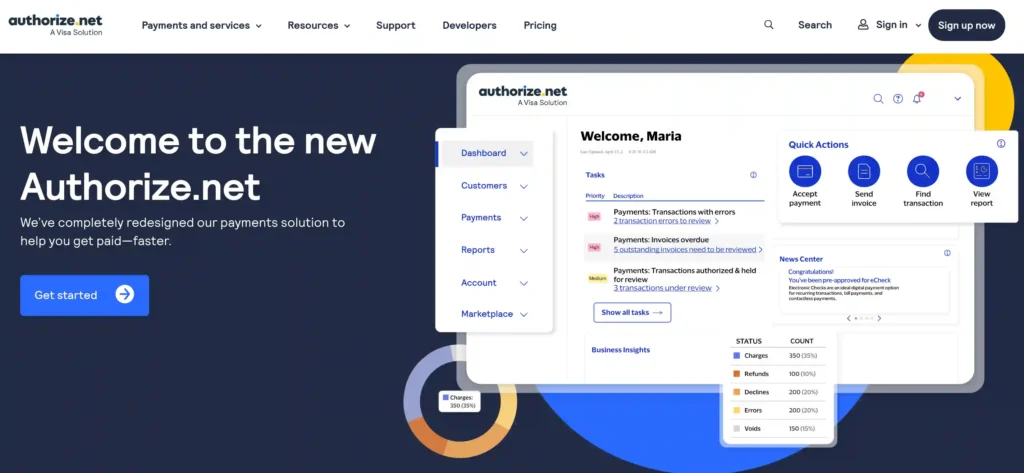
Authorize.net has been around since 1996 and is one of the most trusted payment gateways in the US market. It’s a bit more traditional in its setup compared to Stripe, but highly reliable. It is owned by Visa, and it’s one of the most established payment providers in the industry.
Authorize.net stands out for its reliability and focus on security. It offers features like advanced fraud detection, recurring billing for subscription-based businesses, and support for multiple payment types, including cards and digital payments. While the setup can feel a bit more traditional compared to newer platforms, it’s a solid choice for businesses that prioritize stability, strong security measures, and long-term dependability in their payment processing system.
Key strengths:
- Rock-solid reliability with a long track record
- Strong fraud detection tools
- Supports recurring billing and subscriptions
- 24/7 customer support
- Works with most major merchant account providers
Limitations:
- Standard fees 2.9% plus 30 cents per transaction
- Setup is more involved compared to newer gateways
- Not as developer-friendly as Stripe
Authorize.Net makes sense if you’re processing significant volume and want an established, well-supported gateway with strong fraud protection.
Mollie
Best for: Businesses selling to European customers.
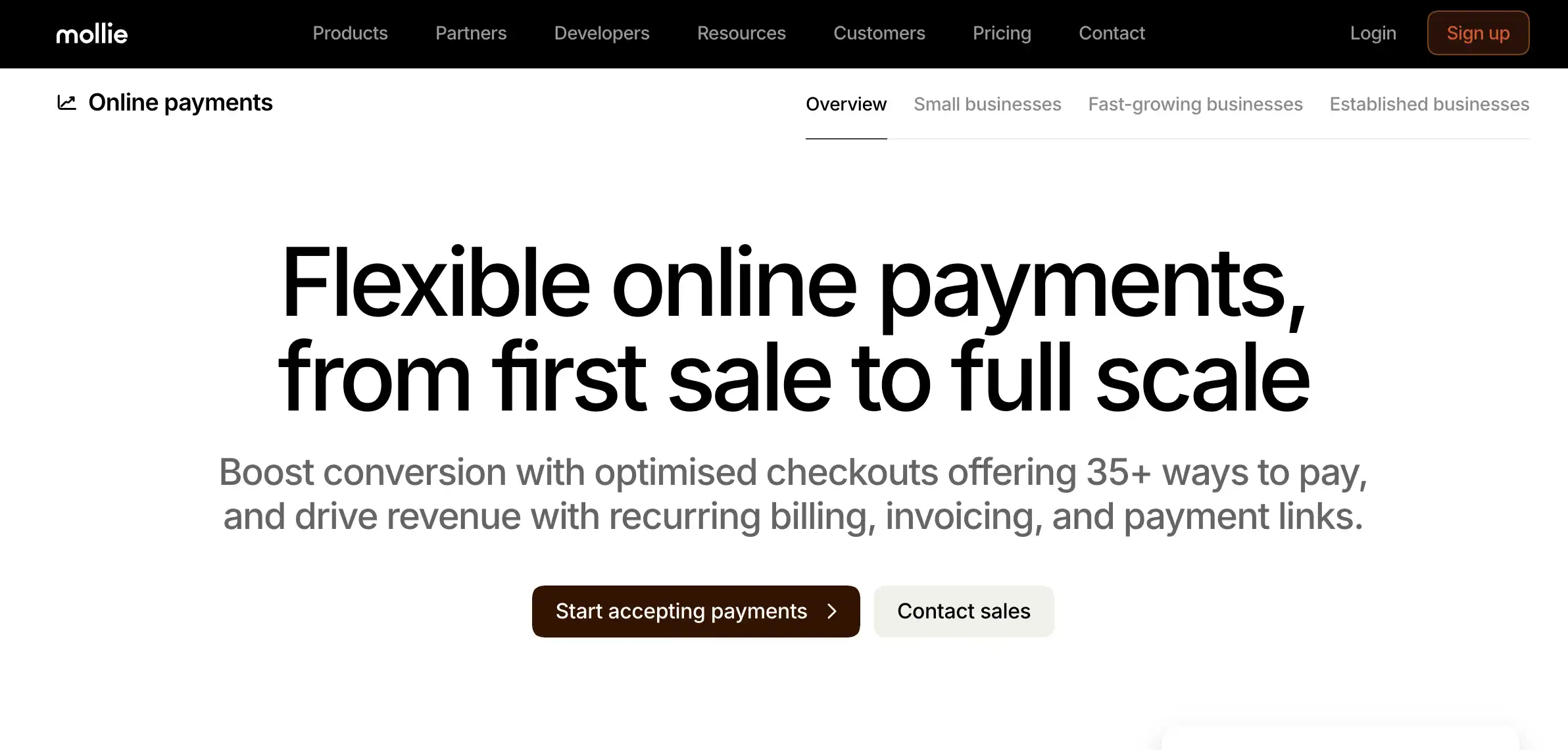
Mollie is one of the fastest-growing payment gateway providers, especially popular across Europe. It allows businesses to accept a wide range of online and in-app payments, including major credit cards, Apple Pay, PayPal, and Klarna, along with several region-specific payment methods.
It supports a wide range of European local payment methods, including iDEAL, Bancontact, SOFORT, EPS, Przelewy24, and Cartes Bancaires. This makes it an excellent choice for businesses targeting customers in countries like the Netherlands, Germany, Belgium, and other parts of Europe. With its simple setup, clean dashboard, and strong local coverage, Mollie helps businesses offer a payment experience that feels familiar and trustworthy to European customers.
Key strengths:
- Native support for iDEAL, Bancontact, SOFORT, Klarna, and other EU-specific methods
- No monthly fees, pay per transaction only
- Clean, simple API and dashboard
- Strong support for WooCommerce and other eCommerce platforms
- Transparent pricing with no hidden charges
Limitations:
- Limited outside Europe
- Smaller global brand recognition compared to Stripe or PayPal
For European eCommerce, Mollie is a genuinely excellent choice, especially if you want to offer local payment methods without the complexity of setting each one up separately.
Razorpay
Best for: Businesses selling to customers in India.
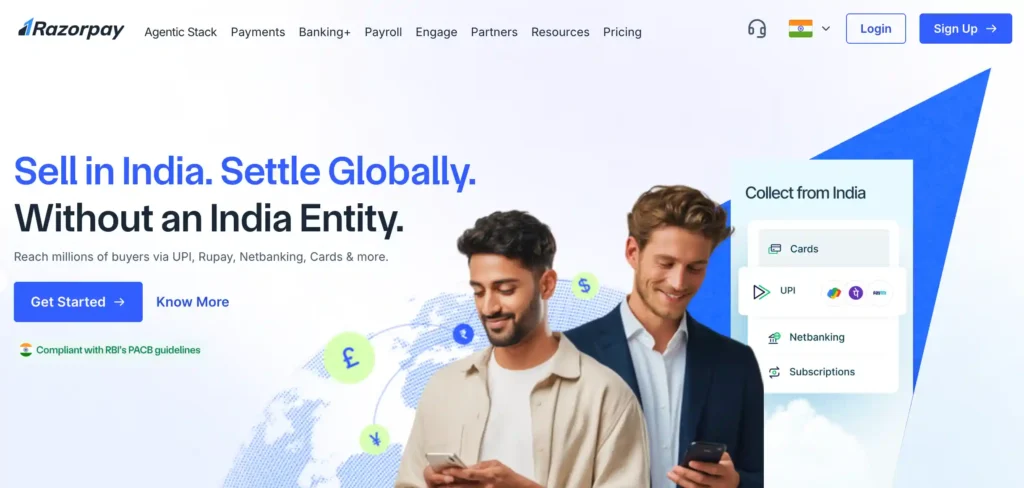
Razorpay is one of the most widely used payment gateways in India, and for good reason. It supports nearly every payment method Indian customers rely on, including UPI, net banking, credit and debit cards, digital wallets, and EMI options. This makes it a practical choice for businesses that want to offer a familiar and flexible checkout experience to their local audience.
It also offers useful features like payment links for quick collections, Flash Checkout for faster repeat purchases, and support for international cards. Along with a developer-friendly API, tools like Smart Collect for automating bank transfers, and 24/7 customer support, it provides a well-rounded solution for growing businesses.
Key strengths:
- Deep support for UPI, the most widely used payment method in India
- Supports 100+ payment methods
- Competitive transaction fees (starting at 2%)
- Strong subscription and recurring payment support
- Route (smart payment routing) for higher success rates
Limitations:
- Limited to India-based businesses (no international expansion yet)
- Customer support can be slow during peak periods
If your primary market is India, Razorpay isn’t just a good option; it’ll be the right one.
Manage multiple payment gateways on WordPress
If your store runs on WordPress, you’ve probably noticed that setting up multiple payment gateways typically means installing multiple plugins, configuring each one separately, and jumping between dashboards whenever you need to check on payments or handle a refund.
That’s where a unified payment plugin makes a real difference.
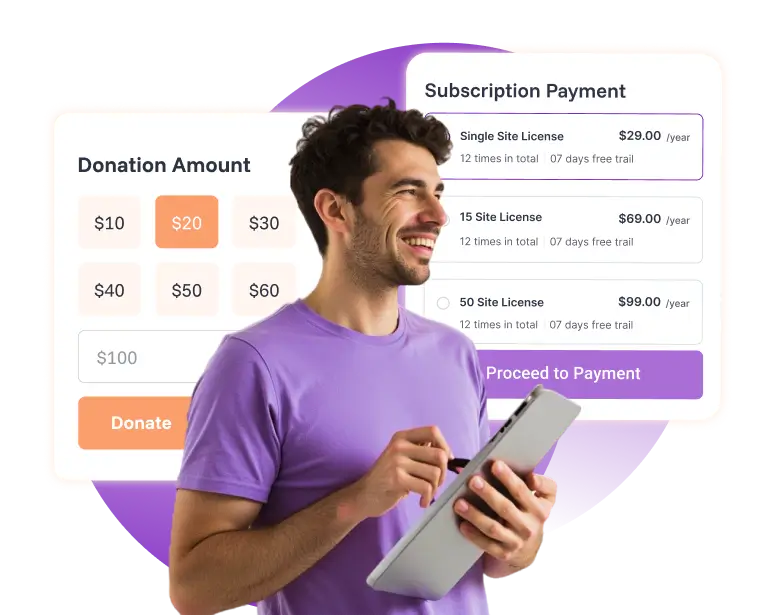
Paymattic is a WordPress payment plugin built specifically to handle this. Instead of installing a separate plugin for Stripe, another for PayPal, and another for Razorpay, Paymattic lets you connect and manage multiple payment gateways from a single place. The plugin offers 13+ payment methods and also lets you add a custom payment gateway, if you want to explore more.
Here are some key features that make it practical for eCommerce and digital product sellers:
- Multiple gateway support in one plugin – Stripe, PayPal, Razorpay, Mollie, Square, and more
- Built-in form builder – Create payment forms, product order forms, and checkout flows without a separate form plugin
- Subscription and recurring payments – Handle recurring billing across supported gateways
- One unified dashboard – View transactions, manage payouts, and handle refunds across gateways without switching between tools
- Tabular product fields – Display products in a structured table format for a clearer shopping experience
- Customer dashboard – Allow customers to view their order history, payment details, and manage their transactions
- Email notifications – Automatically send order confirmation emails when a payment or order is submitted
- No coding required – Straightforward setup designed for non-developers
- Affordable pricing – Significantly cheaper than maintaining multiple premium gateway plugins
Ready to get started?
Experience WordPress payment and donation like never before. Try Paymattic now!
Final thoughts
There’s no single best eCommerce payment solution. The right answer depends on where you sell, what you sell, and how your customers prefer to pay.
That said, a practical starting point for most businesses looks like this: Stripe as your core gateway (it handles the most ground), PayPal as a trust signal for customers who prefer it, and local payment methods added once you understand where your customers are coming from.
For WordPress users, a tool like Paymattic can save a lot of time by letting you manage multiple gateways without the plugin sprawl. It’s not a replacement for Stripe or PayPal, it’s the connective tissue that makes running a multi-gateway setup actually manageable.
Start with what works for your current situation. Build in flexibility to add options as you grow. And remember: the easier you make it for customers to pay, the more of them will.
Join the thousands already enjoying Paymattic Pro!
Frequently asked questions
Here are some commonly asked questions on “eCommerce payment solutions.”
1. How do eCommerce payment solutions work?
They securely collect payment details, verify funds with the customer’s bank, and process transactions so money moves from the customer to your business within seconds.
2. Which eCommerce payment solution is best for beginners?
Stripe and PayPal are popular choices for beginners due to easy setup, wide acceptance, and support for multiple payment methods without complex technical requirements.
3. Do I need multiple payment gateways for my store?
Not always, but offering multiple gateways can improve conversions by giving customers more payment options, especially if you’re targeting different countries or customer preferences.
4. How do eCommerce payment solutions affect conversions?
A smooth, trusted checkout with preferred payment options reduces friction, increases customer confidence, and leads to higher completed purchases and fewer abandoned carts.
5. Can I manage multiple payment gateways in WordPress easily?
Yes, using tools like Paymattic, you can connect and manage multiple payment gateways from one dashboard without installing separate plugins for each provider.

Madhobi
This is Madhobi, a content writer at WPManageNinja with expertise in technical writing and email marketing. Outside of work, she likes traveling and exploring new places.


Leave a Reply