

Donor Engagement Strategies To Boost Recurring Giving


Table of Content
Download Paymattic – it’s Free!
Subscribe To Get
WordPress Guides, Tips, and Tutorials
We will never spam you. We will only send you product updates and tips.
TL;DR: Donor Engagement Strategies
A strong donor engagement strategy helps nonprofits build trust, strengthen relationships, and stay connected with supporters beyond a single donation. When donors feel valued and informed, they’re more likely to give again and become long-term, recurring supporters.
In this blog, you’ll get:
– A clear understanding of the donor engagement cycle
– Insights into why engagement directly impacts recurring giving
– Practical donor engagement strategies you can apply immediately
– A ready-to-use 30-day donor engagement action plan
– Common donor engagement mistakes to avoid
Only 18.6% of first-time donors ever give again. That means more than 8 out of 10 supporters disappear after their first gift.
Nonprofits work hard to promote campaigns. People see a moving story, feel emotional, donate, and then quietly fade away.
Ever think why does this happen?
It doesn’t just mean donors stopped caring; it happens because they never felt connected.
Most of the nonprofit organizers struggle with the same challenge: turning passionate one-time donors into committed recurring supporters. They’re not losing donors because they stopped caring; they’re losing them because they never felt connected.
Without consistent communication, meaningful updates, and clear impact, even the most inspired donor forgets why they gave in the first place.
In this guide, I’ll share practical donor engagement strategies that work whether you manage 200 donors or 50,000. Let’s turn one-time transactions into lasting partnerships and build a recurring donor base that grows year after year.
Understanding the donor engagement cycle
Donor engagement measures how connected supporters feel to your mission, not just whether they give money. An engaged donor opens your emails, shares your posts, shows up to events, and tells friends about your work. And the disengaged donor gives once and forgets you exist.
The donor engagement cycle typically includes five key stages:
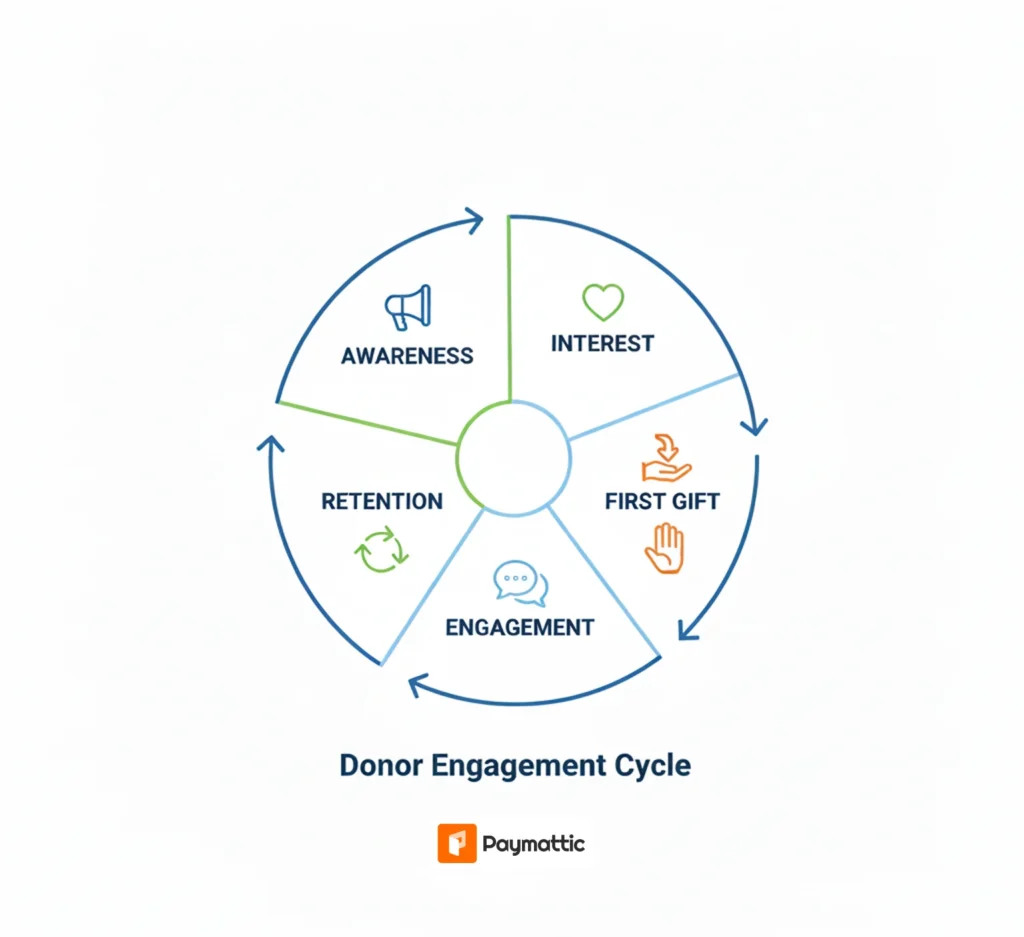
- Awareness: Potential donors discover your cause
- Interest: They learn more and consider supporting
- First gift: They make their initial contribution
- Engagement: You nurture the relationship through meaningful interactions
- Retention: They continue giving and may become recurring donors or advocates
Remember, a 10% improvement in donor retention can increase your fundraising revenue by up to 200% over five years. If you follow and maintain the right donor engagement strategies.
Why donor engagement matters for recurring giving?
Think of donor engagement as the bridge between a one-time gift and a lifetime of support. When donors feel connected to your mission, valued for their contribution, and informed about their impact, they naturally want to continue giving.
The average donor retention rate for nonprofits hovers around 45%. But organizations that apply intentional donor engagement strategies often see retention rates of 60% or higher. That 15-point difference can mean thousands of dollars in additional annual revenue.
Let’s look at a simple example.
Imagine someone donates $50 to a local animal shelter after seeing a Facebook post about rescued puppies. She immediately receives an automated receipt confirming her donation. And that’s it. Six months later, she can’t even remember the organization’s name.
Now, picture a different scenario.
After donating, Sarah receives a short thank-you video from the shelter director. Over the next few months, she gets updates about the puppy her gift helped rescue. She sees real impact and feels included. By the end of the year, she becomes a monthly donor and even invites three friends to give.
Same donor, same initial gift, but completely different outcome. The difference? Strategic, consistent donor engagement.
Here’s why this distinction matters:
- Cost efficiency: Acquiring a new donor costs 5-10x more than retaining an existing one (AFP Fundraising Effectiveness Project)
- Lifetime value: Repeat donors give 42% larger gifts on average than first-time donors
- Advocacy multiplier: Highly engaged supporters refer an average of 3-4 new donors through word of mouth
- Stability: Organizations with 60%+ retention rates weather economic downturns significantly better than those relying on constant acquisition
Recurring giving isn’t built on luck. It’s built on thoughtful donor engagement ideas applied consistently.
Subscribe Newsletter
Subscribe to our newsletter for updates, exclusive offers, and news you won’t miss!
Donor engagement strategies for nonprofits
The 48-hour window after a donation is golden. This is when donors are most receptive to deepening their connection with your cause.
Effective donor engagement ideas are a mix of digital and in-person approaches. Here’s a comprehensive donor engagement strategies that work for organizations of any size.
- Online engagement tactics
- Offline engagement tactics
- Hybrid engagement (combining online and offline)
Online engagement tactics
1. Personalized email sequences
Generic blasts kill engagement. Segmented, personalized emails revive it. One of the simplest yet most effective donor engagement methods is email segmentation.
How to implement:
- Segment donors by: gift amount, giving frequency, acquisition source, interest area, and last engagement date
- Create at least three email tracks: new donors (welcome series), active donors (impact updates), and lapsed donors (re-engagement)
- Reference specific contributions: “Your $75 gift in March helped us provide school supplies for 15 students”
- Test subject lines monthly and track open rates by segment
Small nonprofit approach: Start with just two segments (new vs. returning donors) and expand as you learn what resonates.
Large nonprofit approach: Use CRM automation to trigger personalized sequences based on behavior, such as event attendance, email clicks, and donation patterns.
2. Impact storytelling through video
If you’re looking for high-impact donor engagement ideas, start with storytelling.
Video generates 1200% more shares than text and images combined. A 60-second impact story outperforms a 2,000-word blog post for emotional connection.
How to implement:
- Film short (60-90 second) stories featuring real beneficiaries (with consent)
- Send personalized video thank-yous from staff or beneficiaries to major donors
- Go live on social media monthly to show real-time work
- Create “day in the life” content showing where donations go
Budget-friendly option: Smartphone videos with natural lighting feel more authentic than polished productions. Don’t let perfectionism stop you.
3. Social media community building
Don’t just broadcast. Create spaces for donors to connect with your mission. Community-driven approaches help donors feel like insiders.
How to implement:
- Create a private Facebook or LinkedIn group for engaged supporters
- Share behind-the-scenes content unavailable to the public
- Run monthly Q&As with leadership or beneficiaries
- Celebrate donor milestones publicly (with permission)
- Respond to every comment within 24 hours
4. Make recurring giving easy
Recurring donations don’t fail because donors lose interest. They fail because managing them becomes complicated. Make recurring giving easy on your fundraising website, so supporters can contribute.
How to implement:
- Offer recurring donation options directly on your donation form (monthly, quarterly, annual)
- Let donors choose payment methods directly on the form
- Send automated receipts and renewal confirmations
- Share cumulative impact updates (“You’ve helped fund 3 community clinics this year”)
- Notify supporters before card expiration to prevent failed payments
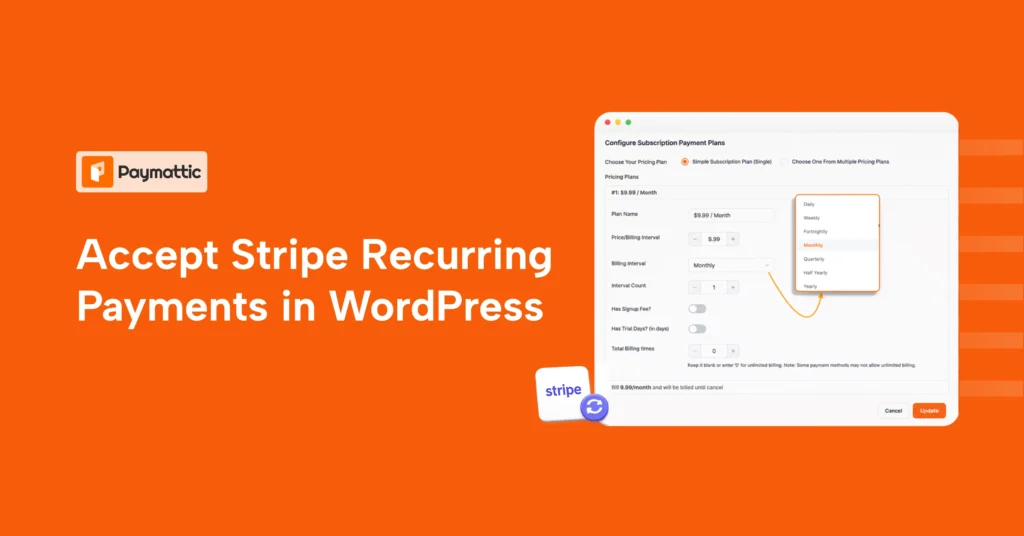
For WordPress-based nonprofits, using a flexible donation system like Paymattic makes this process smoother. It allows you to create customizable recurring donation forms, automate receipts, and let donors manage their subscriptions without manual admin work, helping you retain supporters without increasing operational load.
Click here to know, “How To Accept Recurring Donations Online?”
Offline engagement tactics
5. Handwritten notes and personal calls
In a digital world, analog also stands out. A handwritten note from a board member creates a lasting impression that emails can’t match.
How to implement:
- Board members commit to writing 5-10 thank-you notes monthly
- Executive director calls top 20% of donors personally each year
- Volunteers call first-time donors within 48 hours to say thanks (not ask for more)
- Include a handwritten P.S. on printed appeal letters
6. Exclusive insider experiences
Give donors access they can’t get anywhere else.
How to implement:
- Host quarterly “insider briefings” where leadership shares challenges and wins candidly
- Offer facility tours or program site visits
- Invite donors to meet beneficiaries (appropriately and with consent)
- Create advisory councils where donors contribute expertise, not just money
7. Volunteer involvement
Donors who volunteer give 10x more than non-volunteers. Service creates an emotional investment that writing checks can’t replicate.
How to implement:
- Create skill-based volunteer opportunities (marketing, legal, accounting)
- Offer varied time commitments (1 hour, half-day, ongoing)
- Make volunteering social by organizing group days
- Follow up with volunteers about the impact of their specific contribution
8. Milestone and celebration events
People want to be part of winning teams. Celebrate publicly and invite donors into the joy.
How to implement:
- Host anniversary events (organizational milestones, years of donor support)
- Throw goal-completion celebrations when campaigns succeed
- Send personalized “giving anniversary” cards on the date of the first donation
- Create cumulative giving societies with recognition tiers
Hybrid engagement (combining online and offline)
9. Virtual-physical gift pairing
Connect digital engagement with tangible experiences.
How to implement:
- Send physical welcome kits to new recurring donors (branded items, impact cards, handwritten note)
- Mail “impact boxes” showing what donations funded (photos, letters from beneficiaries)
- Create QR code experiences where physical materials link to video content
- Pair online giving with an option for local pickup events
Bonus tips: 30-day donor engagement action plan
Theory is helpful, but implementation is everything. Here’s how to build a donor engagement plan that actually improves donor retention and recurring support.
Step 1: Audit your current engagement
Before you improve anything, understand what’s really happening.
Many nonprofits believe they’re engaging donors consistently, but when mapped out, communication is often clustered around fundraising campaigns and silent for the rest of the year.
Ask yourself:
- How many touchpoints does the average donor receive annually?
- What percentage of those touchpoints are donation asks versus stewardship updates?
- When did you last survey donors about their communication preferences?
- What is your current donor retention rate?
- Which segments are most engaged and least engaged?
Look at your data honestly. If recurring donors are canceling after 3–6 months, that’s a sign engagement between gifts may be too thin or too transactional.
The goal of this audit is simple: identify friction, gaps, and missed opportunities.
Step 2: Set clear engagement goals
Without specific goals, engagement becomes reactive. Define what success looks like for your organization, especially in terms of retention and recurring growth.
Sample goals:
- Increase donor retention rate from 45% to 55% within 12 months
- Grow a recurring donor base by 50 new monthly givers this quarter
- Achieve a 30% open rate on donor communications
- Host four virtual engagement events with 50+ attendees each
Make goals specific, measurable, and time-bound. Most importantly, tie engagement goals directly to recurring revenue stability. Retention improvements often generate more long-term value than acquiring new donors.
Step 3: Map your engagement touchpoints
Recurring giving is built on momentum. That momentum starts the moment someone donates. Plan your entire donor journey from first gift to long-term partnership.
Create a timeline:
- Day 1: Automated thank-you email
- Day 3: Personal note or call (for gifts above threshold)
- Week 2: Welcome email with mission overview
- Month 1: Impact update
- Month 3: Invitation to virtual event or volunteer opportunity
- Month 6: Donor survey
- Month 12: Anniversary email celebrating one year of partnership
If you offer recurring giving, build special touchpoints just for monthly supporters, such as quarterly insider updates or exclusive virtual briefings.
Remember, consistency builds trust and trust builds retention.
Step 4: Implement, automate, and track
Start with strategies that offer the highest impact with manageable effort. Then measure everything.
Key metrics to monitor:
- Donor retention rate
- Recurring donor growth rate
- Recurring donation cancellation rate
- Email open and click-through rates
- Event attendance
- Average gift size
- Donor lifetime value
- Engagement score (touchpoints per donor per year)
Review performance monthly. Then identify where you need to put more effort and work on it.
Step 5: Continuously improve and experiment
Donor engagement is not a “set it and forget it” activity. What worked last year may not resonate today. Donor expectations evolve, especially in digital communication.
Dedicate 10–20% of your engagement efforts to experimentation. Test:
- Different email subject lines
- Varying communication frequency
- New content formats (short video vs. written updates)
- Alternative virtual event formats
- Different donation page designs
- New recurring giving messaging (“Join our monthly impact circle” vs. “Become a sustaining donor”)
Small optimizations compound over time and significantly improve recurring retention.
Common donor engagement mistakes to avoid
Even the best donor engagement ideas fail when executed poorly. Nonprofits can unintentionally damage donor relationships. Here are common pitfalls and why they matter:
1. Over-communicating: Bombarding donors with constant requests leads to fatigue. Engagement should feel meaningful, not overwhelming.
2. Treating all donors the same: A first-time $25 donor and a five-year monthly supporter should not receive identical communication. Segment and personalize whenever possible.
3. Only reaching out when you need money: If every message is an ask, donors feel transactional. Relationship-building must happen between campaigns.
4. Forgetting to say thank you: Delayed or generic gratitude weakens emotional connection. Thank donors promptly and specifically.
5. Ignoring lapsed donors: Someone who gave once believed in your mission. Re-engagement campaigns can revive that connection, especially if you remind them of the impact they previously made.
6. Making it hard to give: Complex forms, limited payment options, or difficulty managing recurring donations create unnecessary friction. A smooth donation experience directly affects retention.
7. Failing to show impact: Donors don’t just want receipts. They want proof that their contribution matters. Show outcomes clearly and regularly.
Always remember, effective donor engagement strategies focus on relationships, not transactions.
Final thoughts
Donor engagement isn’t a campaign. It’s a commitment to treating every supporter as a partner in your mission.
The nonprofits that build lasting donor relationships aren’t necessarily the ones with the biggest budgets or the slickest marketing. They’re the ones that make every donor feel seen, valued, and connected to real impact.
Start with the donor engagement strategies from this guide. Implement it well in your fundraising campaign. Measure the results, then build from there.
Your donors chose to support your cause. Honor that choice by engaging them as the partners they want to be.
Looking for more nonprofit growth strategies? Explore our guides on different types of donors for nonprofits, Fundraising ideas for organizations, and AI for nonprofits.
Join the thousands already enjoying Paymattic Pro!
Frequently asked questions
Here are some frequently asked questions people often ask about donor engagement strategies.
1. How often should I communicate with donors?
It depends on the engagement level. Monthly donors expect more frequent updates (2-3x/month). Annual donors do well with monthly contact. Lapsed donors need less frequent but more compelling outreach. When in doubt, ask donors their preferences.
2. What’s the best way to engage donors who give small amounts?
Small donors often become major donors over time. Treat them well by including them in impact updates, inviting them to events, and recognizing their contributions alongside larger gifts. Focus on the relationship, not the transaction size.
3. How do I re-engage lapsed donors?
Start with a survey asking why they stopped. Then create a dedicated re-engagement campaign: acknowledge the gap, share recent impact, make a specific ask, and offer multiple ways to reconnect beyond giving.
4. Should I use automation for donor engagement?
Automation handles scale; personalization handles depth. Use automation for welcome series, receipts, and reminders. Add personal touches (handwritten notes, phone calls) for high-value moments like first gifts, major gifts, and giving anniversaries.

Madhobi
This is Madhobi, a content writer at WPManageNinja with expertise in technical writing and email marketing. Outside of work, she likes traveling and exploring new places.
Leave a Reply