

Add bKash Payment on Website | Sell to Millions of Unbanked Users


Table of Content
Download Paymattic – it’s Free!

Subscribe To Get
WordPress Guides, Tips, and Tutorials
We will never spam you. We will only send you product updates and tips.
Most of your website visitors in Bangladesh don’t have a credit card. A lot of them don’t have a bank account either. But almost everyone has bKash.
The bKash payment allows your customer to make online payments simply using their mobile phone. If your checkout doesn’t accept it, you’re losing sales before the customer even gets to the payment page. Paymattic helps you avoid that.
This guide walks you through the ins and outs of the bKash payment gateway and how you can integrate bKash payment into your WordPress website using the Paymattic plugin.
TL;DR
- Most Bangladeshi shoppers pay with bKash, not cards, so skipping it means losing customers before checkout.
- bKash is used by 80M+ people in Bangladesh, many of whom don’t have a bank account at all
- Without bKash, you’re invisible to a huge chunk of buyers who’d otherwise pay you.
- Paymattic adds bKash to your site without needing an add-on; it works as a standalone plugin.
- The connection runs through SSLCOMMERZ, which also unlocks cards, Nagad, and Upay in the same setup.
- You’re not limited to bKash. Paymattic supports 13+ gateways and 135+ currencies if you sell beyond Bangladesh too.
- Setup takes a few steps inside WordPress; no developer or code required.
bKash payment gateway?
bKash is Bangladesh’s largest mobile financial service, used by more than 80M+ people for everything from splitting a lunch bill to paying school fees. It runs entirely through a mobile app no bank branch or card needed.
For merchants, that scale is the point. A large share of bKash’s user base doesn’t have a traditional bank account at all. If your checkout only accepts cards, you’re invisible to them. If it accepts bKash, you’re not.
Beyond reach, bKash also solves a trust problem. Bangladeshi buyers are far more comfortable paying through an app they use daily than typing card details into an unfamiliar checkout page. That familiarity alone can move the needle on conversion.
Paymattic: a WordPress plugin built to accept bKash payments
Paymattic is one of the best and most popular WordPress plugins for accepting donations & online payments. You can create payment forms with Paymattic in just a few clicks. Besides, you don’t need to use any other plugin to use Paymattic. It is a completely independent plugin that requires no other plugin to use all its features.
You can receive bKash payments through the SSLCOMMERZ payment gateway using Paymattic. SSLCOMMERZ is the largest payment gateway aggregator based in Bangladesh. It supports all debit cards, credit cards, and prepaid cards, including mobile banking such as bKash, Nagad, Upay, and other internet banking systems.
Other than SSLCOMMERZ, Paymattic supports 14 popular payment gateways in the pro version. However, you can get the Stripe payment gateway in the free version. The payment gateways include –
- Stripe (free)
- PayPal
- Square
- Mollie
- Razorpay
- SSLCOMMERZ
- Paystack
- Payrexx
- Xendit
- Billplz
- Flutterwave
- Moneris
- Viva Wallet
- Authorize.net
However, you can set instructions for cheque or bank account payment in the form using the offline payment method option.
Most of the available WordPress plugins for bKash payment are the add-ons of the WooCommerce plugin. Paymattic is an independent plugin that allows you to add bKash on your WordPress website without using any other plugin.
This is a multi-purpose plugin that can be used to accept payments for a product or service as well as to collect donations. The Donation Progress Item feature adds a dynamic progress bar to the form. With the Tabular Product Items field, you can create a product table in the form.
There’s more! Paymattic accepts 135+ currencies. So, you can accept payments from any corner of the world with any type of currency you wish!
Ready to get started?
Experience payments and donations for WordPress like never before. Try Paymattic now!
Tutorial: Steps to add bKash payment on your WordPress website
Adding bKash payment to the WordPress site is as simple as a few mouse clicks. Follow the steps below and learn how to integrate the bKash payment gateway into your website –
Install & Activate Paymattic Pro
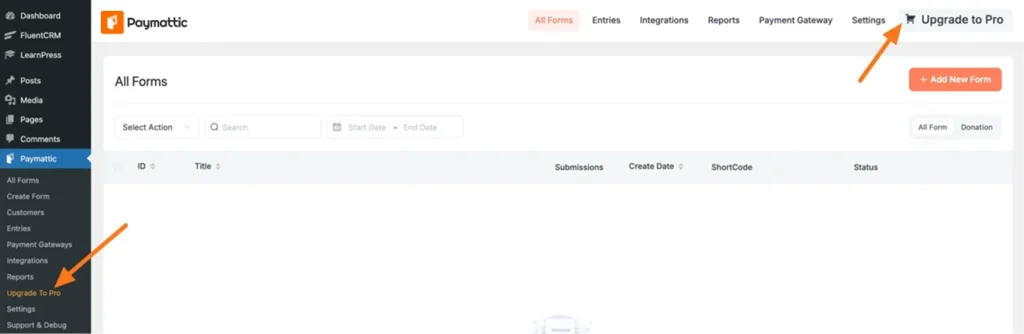
First, you need the Paymattic Pro WordPress plugin to accept bKash payments in WordPress. To install the plugin go to the Dashboard of Paymatic’s free version and click on the Upgrade to Pro button to purchase the Pro version.
Or, you can simply purchase the Pro version of Paymattic from here.
Create a payment form
Once you have activated the plugin, now create a payment form to receive payment. You can use this payment form as a checkout form. Let’s see how to create a payment form in a blink.
To create a payment form, go to Paymattic dashboard > All Forms > Add New Form.
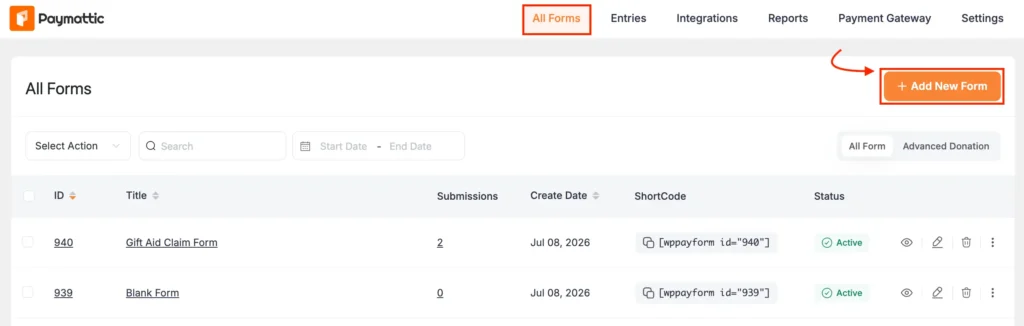
Here you’ll find three options:
Blank Form: Start building your payment form from scratch.
Choose Template: Skip the hassle of creating a form manually by using one of our ready-made payment form templates.
Import Form: Already have a form created elsewhere? Simply import it here.
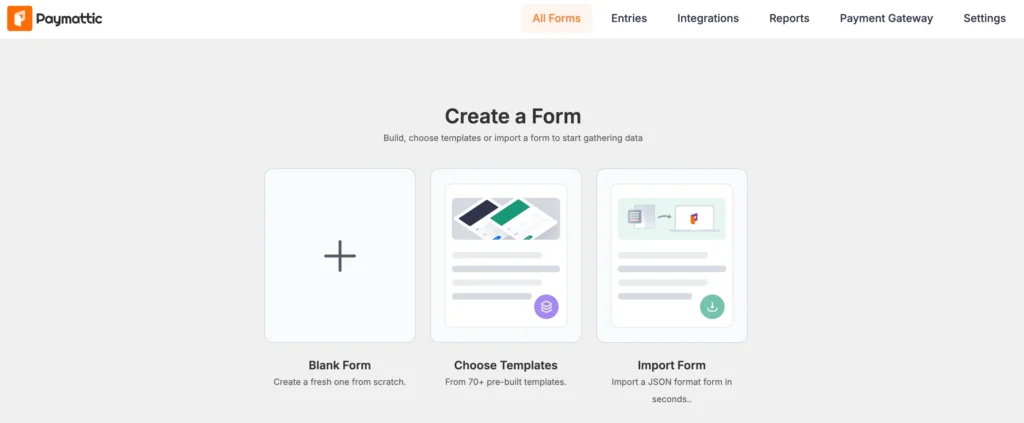
Have a look into this blog to learn how to create a payment form in more detail
Add payment method
Adding a payment method in Paymattic is simple, like adding a form field. Simply click the “+” icon and select the payment method. You need to add specifically the SSLCOMMERZ payment gateway to receive bKash payment.
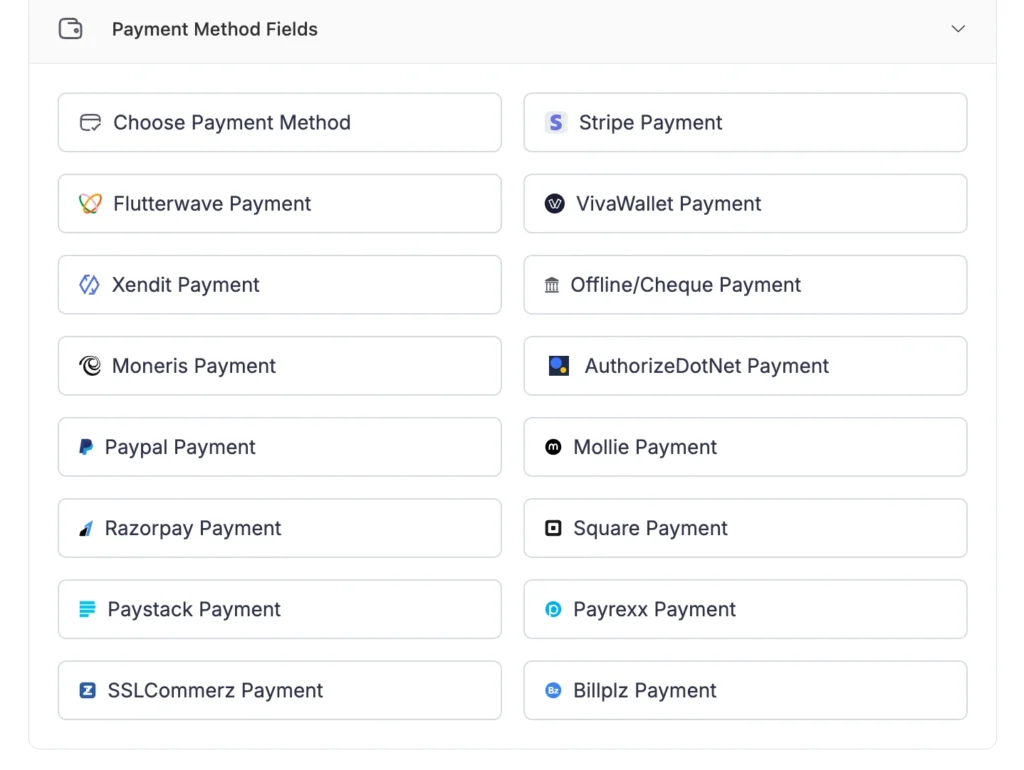
Remember, it’s required to configure SSLCOMMERZ with Paymattic to function all the payment processing properly. Read this blog to learn how to integrate SSLCOMMERZ with Paymattic
Publish the payment form
You are nearly finished! You have created the payment form & added the SSLCOMMERZ payment gateway. Now, it’s time to publish the form on your checkout page. To do so –
- Go to Paymattic → All Forms & select the form you want to publish on your payment page.
- Copy the shortcode of the payment form & paste it on the payment page.
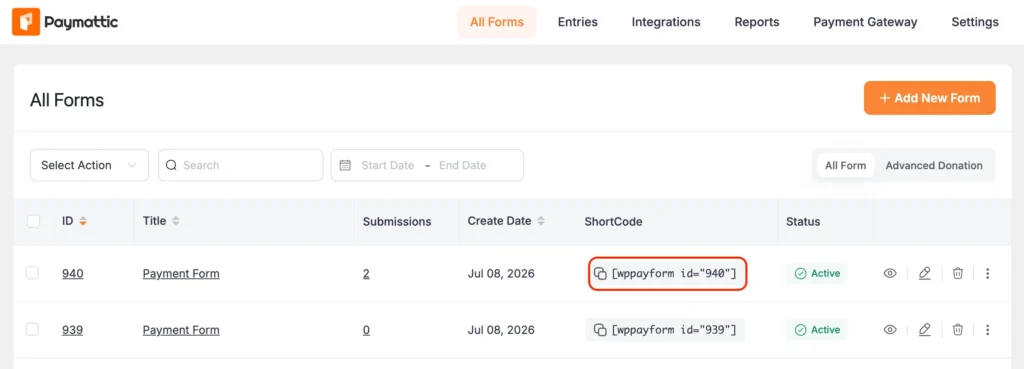
Finally, publish the page & you are ready to accept payment with bKash! Here is a sample preview of how your bKash payment form may look.

Shuyeb Ahmed
Hi, This is Shuyeb. I am a digital marketing enthusiast, love to write about WordPress products and new updates. At the weekend, you will find me exploring nature & beautiful places.
Leave a Reply